



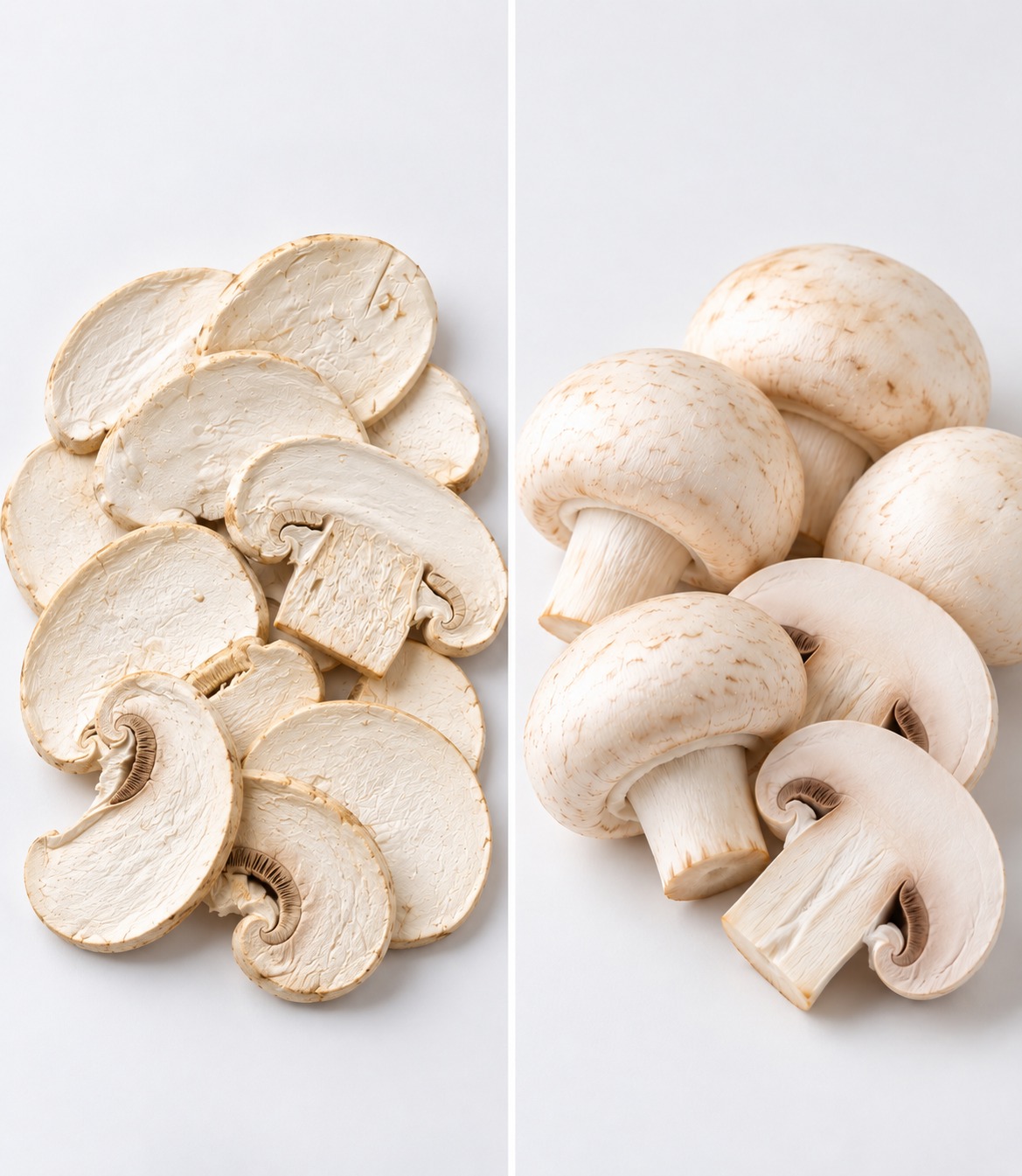

Fresh vs. Dried Mushrooms: A Procurement and Cost Comparison
If you are comparing dried and fresh mushrooms, you are most likely assessing which format is more cost-effective, more controllable, and better suited to your supply chain as a buyer. This article breaks down the differences from three perspectives: procurement, transportation, and cost. The conclusion up front: the fundamental difference between dried and fresh mushrooms is water. Fresh mushrooms are mostly water by weight; dried mushrooms have had that water removed. Nearly every downstream difference stems from this fact.
Water Determines the Fundamentals of Both Formats
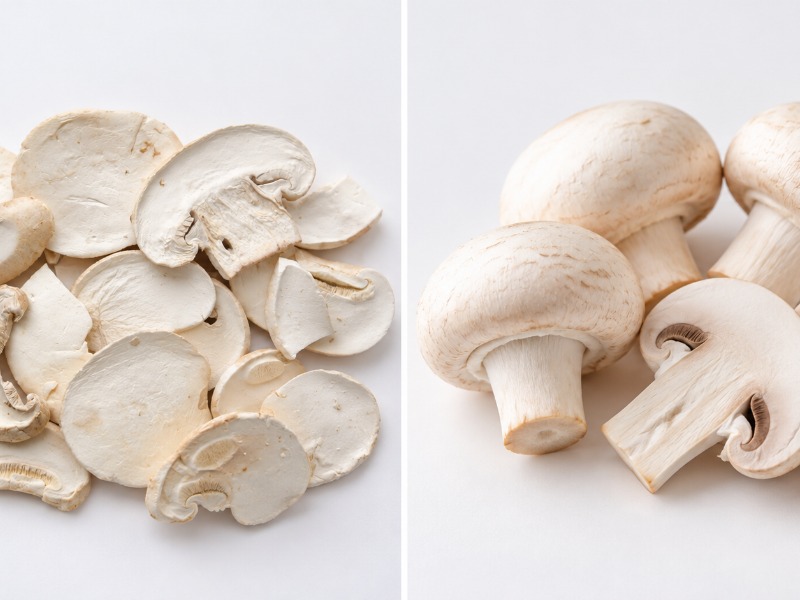
Fresh mushrooms typically contain more than 80% moisture, while dried mushrooms have a much lower moisture content. This difference has two direct consequences.
The first is the conversion ratio. It takes several kilograms of fresh mushrooms to produce one kilogram of dried mushrooms. Because water is removed during drying, each kilogram of dried mushrooms contains substantially more mushroom solids than each kilogram of fresh mushrooms.
The second is the usable window. Fresh mushrooms must enter distribution or processing within a few days of harvest, or quality declines quickly. Dried mushrooms can be stored for a considerable period under sealed, dry, ambient conditions. This difference carries through to procurement frequency and inventory strategy.
Don't Look at Unit Price Alone
The most common mistake in procurement is to compare the per-kilogram quote for dried mushrooms directly with the per-kilogram quote for fresh mushrooms. That comparison is not meaningful, because the two are not selling you the same thing. Fresh mushrooms require trimming after delivery—stems, damaged caps, and product that fails appearance standards must be removed—and that loss is real. Dried mushrooms have already been processed and graded, so trimming waste is minimal, and weight recovers substantially after rehydration. What you should really calculate is the cost per usable kilogram, not the unit price.
Fresh mushrooms are affected by season, origin, and harvest windows, so variation between one lot and the next is normal. Dried mushrooms are graded during processing, and moisture, color, and size can be locked in before shipment. For processors and chain restaurants that need fixed formulations and consistent output, that consistency is valuable in itself.
With fresh mushrooms, you buy only what you can use, because they do not keep. Dried mushrooms allow you to extend procurement intervals. For importers and distributors, that means a more manageable ordering rhythm and more control over overstocking risk and working capital tied up in inventory.
What Your Freight Is Actually Carrying
The difference in transportation is more obvious than in procurement. A large share of the shipping weight of fresh mushrooms is water. When you pay freight, part of what you are paying for is water that will eventually evaporate or spoil. Dried mushrooms remove that dead weight, so the same freight base can carry more usable product, and the transportation cost per unit of product is diluted. Fresh mushroom exports essentially require full cold-chain handling, and reefer container freight runs higher than standard dry container freight. Dried mushrooms ship in standard dry containers at ambient temperature. On long-haul ocean freight, lower freight and cold-chain handling costs can help offset the price premium of dried mushrooms, depending on the route and shipment volume.
Fresh mushrooms are sensitive to temperature fluctuations, compression, and microorganisms, and the resulting losses ultimately fall on the buyer. When properly dried, packaged, and protected from moisture, dried mushrooms generally face a lower risk of spoilage-related losses during transit.
Adding It All Up
Looking at any single line item can lead to a one-sided conclusion. Only by combining procurement, transportation, warehousing, and losses do you get close to the true cost.
The total cost of fresh mushrooms is roughly the purchase unit price plus cold-chain freight, refrigerated warehousing, trimming losses, spoilage losses, and the administrative cost of frequent purchasing. The total cost of dried mushrooms is the purchase unit price plus standard freight, ambient warehousing, very low losses, and the administrative cost of less frequent purchasing.
Put the two side by side, and the price premium of dried mushrooms is often offset by cold-chain savings, reduced losses, and lower warehousing costs—and in many cases more than offset. That is why many importers and processors, after running the numbers, make dried mushrooms their primary procurement format.
Where Fresh Mushrooms Still Make Sense
To be clear, fresh mushrooms remain the better choice in some situations. For dishes that require a crisp, fresh texture and intact appearance, rehydrated dried mushrooms genuinely cannot replicate that state. For foodservice operators who buy locally and use the product the same day, cold-chain and loss costs are already very low, so the advantages of fresh mushrooms come through. And in retail fresh-produce channels, consumers are willing to pay a premium for "fresh." But if you are an importer, a processor, a central kitchen for a restaurant chain, or a distributor who needs to stock across regions, the system-level cost advantages of dried mushrooms can be significant.
As a dried mushroom manufacturer and exporter, we provide stable moisture control, clearly defined grade specifications, and batch-level traceability. If you are running this comparison, share your product category and volumes with us, and we can work through the numbers for your specific situation.