



Drum Drying Process: How It Works and How Food Powders Are Made
Drum drying is a continuous drying method widely used in the food industry, particularly for viscous liquids, slurries, pastes, and purees. It uses direct heat transfer through a heated metal drum to remove moisture quickly, making it suitable for producing dried food ingredients from a variety of materials, including fruits and vegetables.
The drum drying process offers efficient heat transfer and relatively short drying times. Depending on the equipment configuration and product characteristics, it can produce dried sheets or flakes that are subsequently milled into powder. Understanding how drum drying works, how feed material is applied, and how pretreatment affects the material is essential for achieving consistent product quality.
How Does the Drum Drying Process Work?
Drum drying was developed in the early 20th century and remains an established technology for processing liquid and semi-liquid food materials. In a conventional drum dryer, one or two hollow metal cylinders rotate around horizontal axes. The drums are heated internally, typically with steam, while the product is applied as a thin, uniform layer to their outer surfaces. Heat is transferred through the drum walls to the product, causing moisture to evaporate.
As the drums rotate, the material gradually dries. A scraper blade, also known as a doctor blade, removes the dried layer from the drum surface. The resulting sheets or flakes can then be milled and sieved to obtain the desired powder consistency.
The main stages of the drum drying process are:
Feed preparation: The liquid, slurry, or puree is prepared with suitable solids content and viscosity.
Film formation: The material is distributed evenly across the heated drum surface.
Moisture evaporation: Heat transferred through the drum wall rapidly evaporates moisture.
Product removal: A scraper blade removes the dried material from the drum.
Milling and sieving: The dried sheets or flakes are processed into powder or other required particle sizes.
The drying time is generally short, often ranging from seconds to a few minutes depending on the equipment and operating conditions. Drum drying can be energy-efficient, particularly for viscous and puree-based products.
Main Types of Drum Dryers
Drum dryers are classified by drum configuration and operating conditions. Common designs include single-drum, double-drum, twin-drum, and vacuum drum dryers.
Single-Drum Dryers
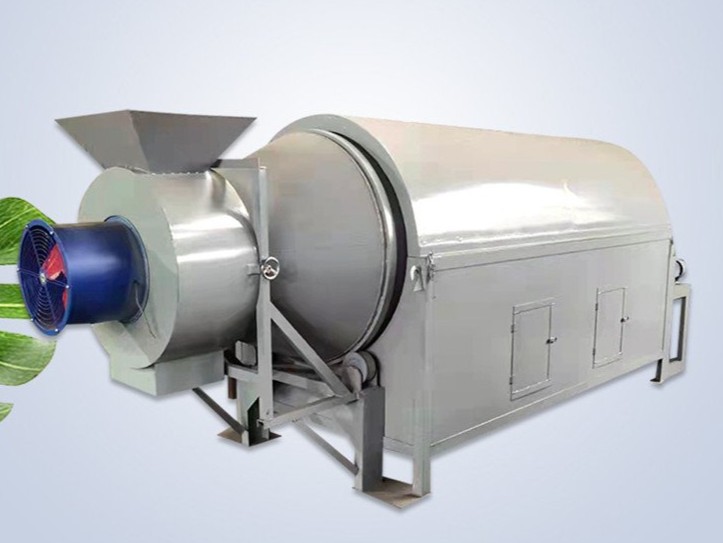
A single-drum dryer uses one heated hollow cylinder. The feed material is applied to the drum surface through an appropriate feeding system, such as applicator rollers or dip feeding. As the drum rotates, the material dries and is removed by a scraper blade. Single-drum dryers are used for various food products, including fruit and vegetable purees, cooked starch, and potato-based products.
Double-Drum Dryers
A double-drum dryer consists of two heated cylinders rotating toward each other at the top. The feed material is introduced into the gap between the drums, and the spacing between them helps control the thickness of the product layer.
The material is spread over the heated surfaces, dried as the drums rotate, and removed by scraper blades. The resulting dried material can subsequently be milled into flakes or powder.
Twin-Drum Dryers
Twin-drum dryers also use two heated cylinders, but their rotational arrangement differs from that of conventional double-drum dryers. Feed material may be applied using dipping, spraying, or splashing, depending on the equipment design.
The suitability of each configuration depends on factors such as the feed material's physical properties, desired output, and production requirements. Since terminology can vary among technical references and equipment manufacturers, the actual drum arrangement and feeding mechanism are important considerations when selecting a dryer.
Vacuum Drum Dryers
For certain heat-sensitive materials, vacuum drum drying can help reduce the temperature required for moisture evaporation. The drums are enclosed in a vacuum chamber, where reduced pressure lowers the boiling point of water.
This approach may help limit thermal damage to products that are sensitive to heat. However, vacuum drum dryers require additional equipment to maintain the vacuum and handle feeding and discharge under reduced pressure. Their equipment and operating costs are therefore generally higher than those of conventional atmospheric drum dryers.
Common Feeding Methods Used in Drum Dryers
The feeding method determines how the wet material is distributed over the heated drum surface. The appropriate method depends on the drum configuration, solids content, viscosity, wetting characteristics, and tendency of suspended particles to settle.
Five common feeding methods are used in industrial drum drying.
Roll feeding: Applicator rollers transfer and distribute the material onto the drum surface. This method is particularly useful for viscous or sticky materials that require controlled film formation.
Nip feeding: The feed material is introduced into the gap between two drums. The gap helps determine the thickness of the layer formed on the drums. This method is generally associated with double-drum dryers.
Dip feeding: Part of the drum is immersed in a feed tray. As the drum rotates, material adheres to its surface and is carried into the drying zone.
Spray feeding: The material is sprayed onto the drum surface through nozzles. The spray system controls how the feed is applied and distributed.
Splash feeding: The material is splashed from a feed reservoir onto the rotating drum surface. This method can be useful for certain suspensions, particularly where suspended solids tend to settle.
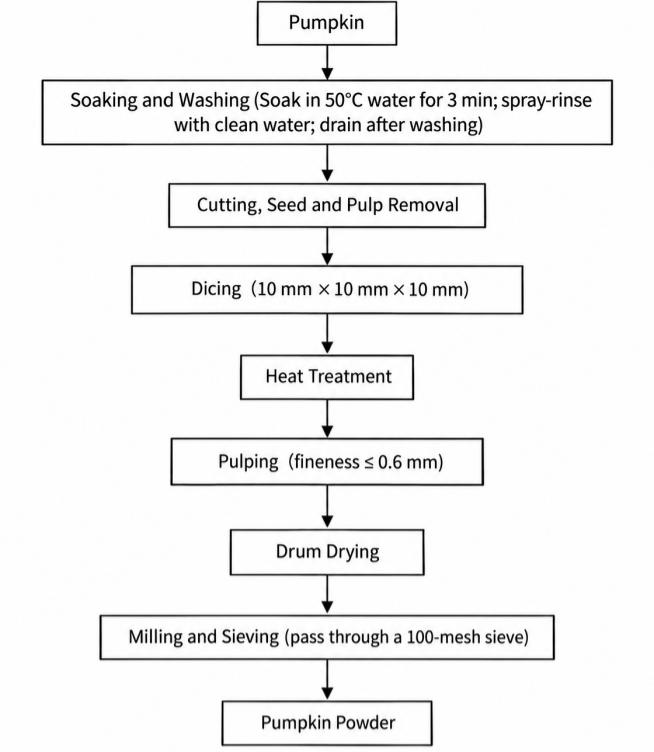
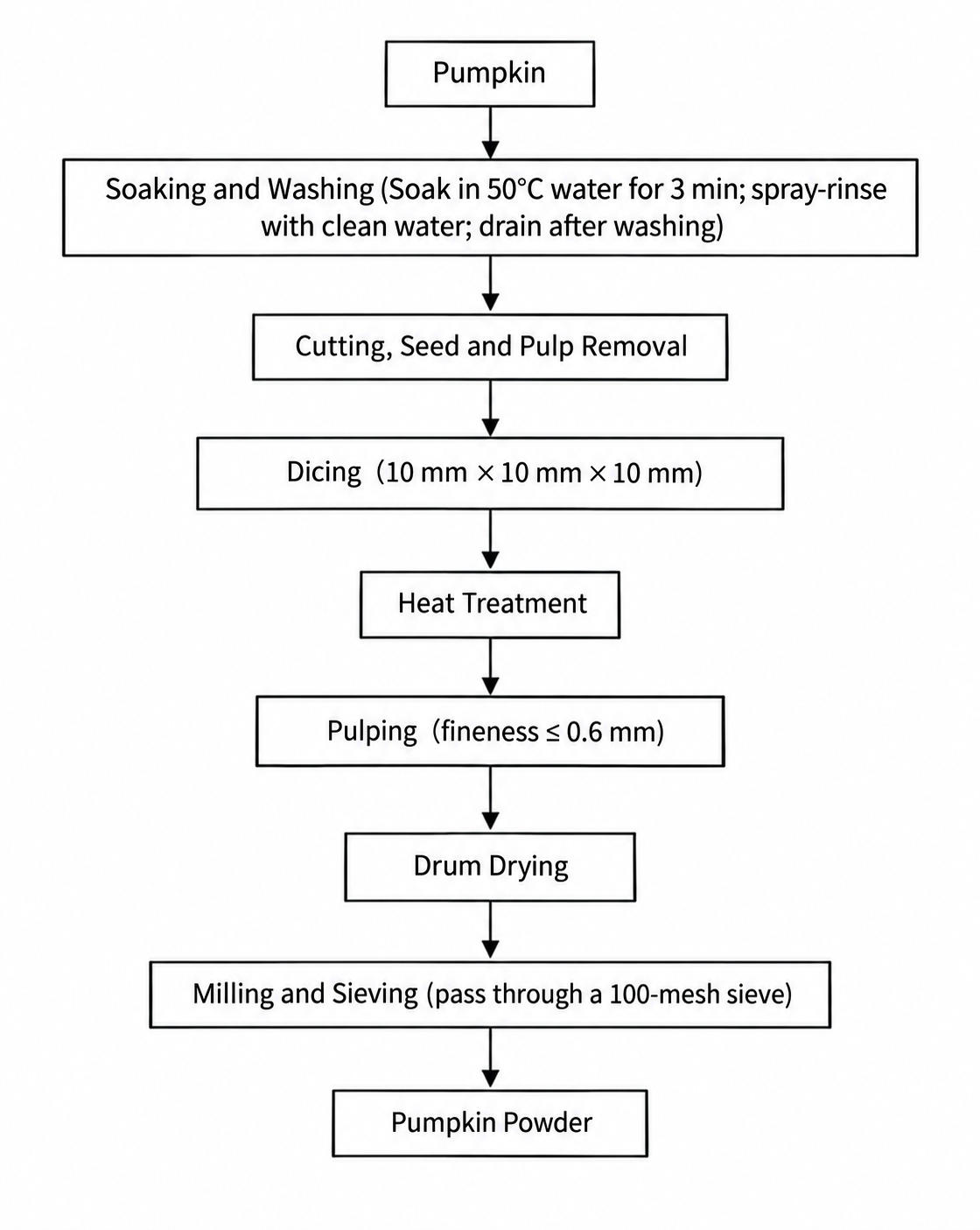
Drum Drying Process for Pumpkin Powder
Pumpkin powder is one example of a vegetable powder that can be produced using drum drying. The process follows these main steps:
Why Is Heat Treatment Important in Pumpkin Powder Production
Heat treatment is an important pretreatment step in many drum-drying processes for fruit and vegetable purees. Its purpose is not simply to heat the material, but to prepare it for efficient drying while helping preserve the desired product characteristics.
Some naturally occurring enzymes can contribute to undesirable changes in color, flavor, and other quality attributes during processing. Appropriate thermal treatment can reduce enzyme activity and help limit enzymatic browning.
Pumpkin contains starch, pectin, and other naturally occurring components that influence the consistency of its puree. When sufficient starch is present, heating in the presence of water can promote starch gelatinization, increasing viscosity and changing the structure of the material. Heat treatment also softens the pumpkin tissue, making it easier to process into a uniform puree. These changes can help improve the puree's consistency and its ability to form a continuous layer on the drum surface.
Uniform film formation is essential for effective drum drying. If the feed material is too thin, too thick, or unevenly distributed, drying performance and final product quality may become inconsistent.
Heat treatment, together with appropriate pulping and formulation, can help produce a puree with suitable viscosity and stability. This supports more uniform spreading and moisture removal.
However, the natural starch and pectin content of pumpkin varies with the variety, maturity, and composition of the raw material. Their presence does not guarantee that every formulation will form an adequate film without further adjustment. The need for additional ingredients, such as thickening agents, should be determined through formulation development and process trials.
Drum-Dried Powders from ShunDi
ShunDi provides drum-dried powder ingredients for food manufacturers and other commercial buyers, including pumpkin powder, sweet corn powder, sweet potato powder, and purple sweet potato powder. These ingredients can be considered for applications such as soups, sauces, seasonings, bakery products, and snack formulations. As a manufacturer and exporter, ShunDi works with customers on ingredient requirements and product specifications for their processing applications.