Email: sales@shundifoods.com     Tel: +86-21-64280601
0%

Freeze-dried garlic has really become a handy ingredient for food manufacturers, distributors, and professional kitchens around the globe. It keeps that classic garlic aroma intact, but at the same time, it helps cut down on weight, spoilage risks, and prep time. You’ll find it in all sorts of forms—flakes, granules, powder, minced bits, cloves, slices—you name it. Each format has its own special use, depending on what you need in the kitchen or production line.

Choosing the right type isn’t just about size; you also wanna consider moisture content, color, how strong the aroma is, and how the packaging is designed. For example, finely milled powder mixes easily into sauces, seasonings, or instant foods. Larger flakes, on the other hand, are perfect if you want a bit of texture in snacks, soups, or ready meals. And minced garlic freeze-dried products can really speed up cooking since you don’t have to peel or chop anything—a total timesaver! Of course, a good supplier should be transparent: clear specs, batch info, allergen statements, and handy storage tips are all must-haves.

Even small details matter here. A resealable bag can help lock in that great aroma after opening, and using desiccants can keep moisture at bay. But honestly, packaging alone isn’t enough to make up for poor processing quality. It’s smart to see and test samples in real production setups—not just look at pictures or catalogs. You might find differences in flavor, how fast it rehydrates, dust levels, or even color, depending on who you buy from. No one type is the absolute best—it really depends on your needs.

This guide walks you through ten of the most common freeze-dried garlic types for international buyers. We cover what they’re best used for, how to handle them, what quality signs to look out for, and questions to ask your supplier. Keep in mind, some of these recommendations might need a little tweaking based on your regional recipes or the equipment you’ve got in your factory. That’s totally normal—better to acknowledge it upfront. Skillful purchasing teams usually compare lab data with actual sensory tests to make sure they’re making solid, informed decisions. Reliable sourcing comes down to evidence, thorough sampling, and honest communication — no shortcuts.
Top 10 Types of Freeze Dried Garlic for Global Buyers

Freeze-Dried Garlic: Definition, Features, and Global Market Uses

Freeze-dried garlic is fresh garlic with most of its water removed under vacuum after freezing. The process helps retain its aroma and flavor while keeping it lightweight and easy to store. It does not taste exactly like fresh garlic. A little goes a long way.

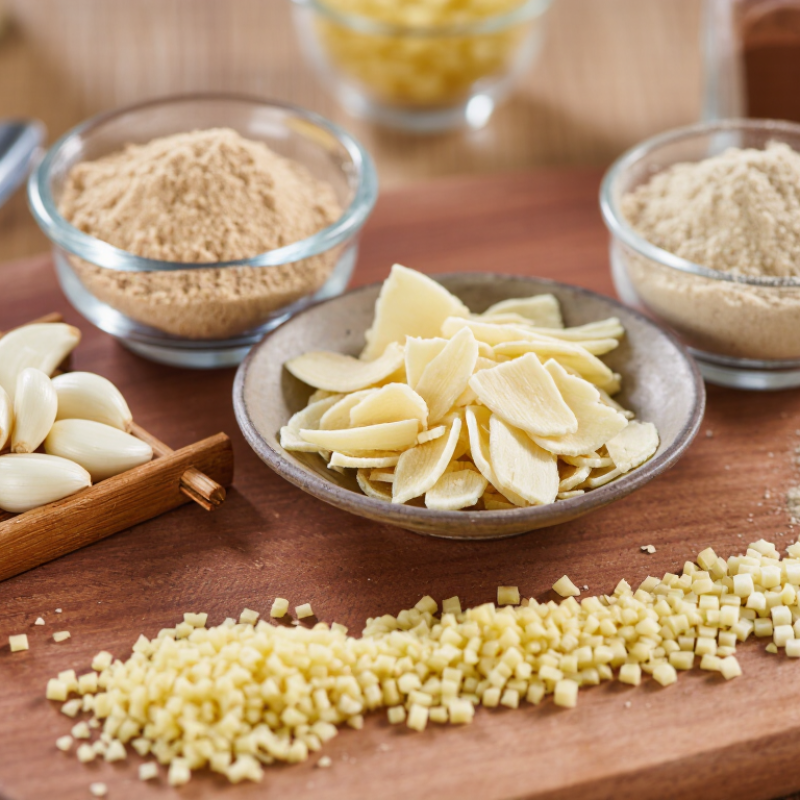
Buyers can choose whole or split Freeze Dried Garlic Cloves, slices, minced pieces, granules, or powder. Piece size affects how quickly garlic softens and how it feels in a finished dish. Cloves work well in soups, sauces, and marinades; granules suit seasoning blends, while powder mixes easily into dry ingredients. Check aroma, color, particle size, moisture, and pack condition. A pale color alone does not prove quality.

Food producers use freeze-dried garlic in snack coatings, instant meals, spice mixes, and meal kits, where consistent flavor and lower shipping weight can be useful. Home cooks can rehydrate pieces with water or add them directly to moist dishes. Test a sample in the intended recipe; the aroma in the pouch can be misleading. Follow the supplier’s storage guidance and reseal opened packs promptly. One drawback is easy to overlook: the pieces can be fragile in transit, and the product may cost more than conventionally dried garlic.

The Main Classification Criteria for Freeze-Dried Garlic Products

Freeze-dried garlic is best classified by physical form, particle size, and intended use. Whole or sliced pieces keep visible structure and suit soups, sauces, and prepared meals. Granules disperse more evenly in dry blends, while powder mixes quickly but can clump if exposed to moisture. Small differences matter.

Buyers should also assess color, aroma, and texture. Pale cream to light yellow pieces are common, though natural variation can occur between harvests. A crisp bite and clean garlic scent can indicate good handling, but appearance alone cannot confirm quality. Request a representative sample and compare it with the product specification.

Moisture control and packaging are practical classification criteria, especially for Freeze Dried Garlic Bulk purchases. Check the stated moisture level, particle-size range, and whether the packaging protects against humidity. These details affect storage and consistency in production. A sample can behave differently from a full shipment, so batch checks are worth considering. Product categories sometimes overlap; granules may vary in size, and “powder” is not always equally fine. That deserves a closer look.

Ten Common Types of Freeze-Dried Garlic for International Buyers

International buyers usually classify freeze-dried garlic by shape, particle size, and intended use. Ten common types appear across food manufacturing and retail markets. Whole cloves offer strong visual appeal and work well in soups, sauces, and meal kits. Peeled cloves save preparation time, although their packaging must prevent moisture entry. Clove halves release flavor faster and suit ready-to-cook products. Sliced garlic creates visible pieces for toppings and seasoning blends. Diced garlic provides a balanced texture for marinades and processed foods.

Minced garlic is finer and disperses quickly in sauces. Chopped garlic gives a more noticeable bite in instant meals. Garlic flakes are light, irregular, and easy to measure by hand. Garlic granules provide consistent dosing in industrial recipes. Freeze Dried Garlic Powder delivers the fastest blending performance, especially in dry mixes, snack coatings, and seasoning systems. Particle size can still vary between suppliers. Ask for a sieve specification.

Color should remain cream to light yellow, without excessive browning. A clean, sharp aroma suggests proper drying and storage. Check moisture content, microbiological reports, allergen statements, and packaging strength before ordering. Transparent bags may expose the product to light and humidity. That matters. Rehydration tests are also useful, but they can mislead if water temperature changes. One overlooked issue is clumping after opening. Buyers should test the product in the final recipe, not only in a laboratory sample. No format is perfect.

Top 10 Types of Freeze Dried Garlic for Global Buyers - Ten Common Types of Freeze-Dried Garlic for International Buyers

Typical commercial characteristics and applications for international sourcing

No. Freeze-Dried Garlic Type Typical Form or Cut Typical Residual Moisture Typical Rehydration Time Common International Applications Common Export Packaging
1 Whole Freeze-Dried Garlic Cloves Intact peeled cloves, generally uniform in size About 3–5% 10–20 minutes Ready-meal production, sauces, soups, foodservice, and retail cooking kits Moisture-barrier bags, vacuum packs, or cartons with inner liners
2 Freeze-Dried Garlic Clove Halves Peeled cloves cut lengthwise into halves About 3–5% 8–15 minutes Seasoning blends, marinades, soups, meal kits, and prepared foods Laminated foil bags, bulk sacks with liners, or sealed pouches
3 Freeze-Dried Garlic Slices Thin crosswise slices, commonly about 1–3 mm thick About 3–5% 5–10 minutes Instant noodles, soups, snack seasonings, bakery products, and garnishes High-barrier pouches, lined cartons, or nitrogen-flushed bags
4 Freeze-Dried Diced Garlic Small cubes, commonly approximately 3–6 mm About 3–5% 5–10 minutes Sauces, frozen meals, stuffing, meat products, and vegetable mixes Bulk foil bags, lined cartons, or food-grade plastic containers
5 Freeze-Dried Minced Garlic Fine irregular pieces, commonly about 1–3 mm About 3–5% 3–8 minutes Sauces, dressings, spice mixes, instant foods, and processed meats Resealable pouches, foil-lined bags, or bulk containers
6 Freeze-Dried Garlic Flakes Thin, irregular flakes or broken garlic pieces About 3–5% 5–10 minutes Soup mixes, seasoning toppings, snack coatings, and decorative food applications Moisture-proof bags, laminated pouches, or lined fiber drums
7 Freeze-Dried Garlic Granules Free-flowing particles, commonly about 0.5–2 mm About 3–5% 2–5 minutes Dry seasoning blends, sauces, meat rubs, snack foods, and food manufacturing Foil-lined sacks, multilayer pouches, or sealed drums
8 Freeze-Dried Garlic Powder Fine milled powder, with particle size specified by the buyer About 3–5% Immediate dispersion Sauces, spice blends, instant products, bakery mixes, and flavor systems Small sachets, foil bags, lined cartons, or sealed food-grade drums
9 Freeze-Dried Roasted Garlic Pieces Roasted garlic pieces, flakes, or granules with a cooked flavor profile About 3–5% 3–10 minutes Soup bases, savory snacks, sauces, ready meals, and specialty seasoning blends Light- and oxygen-barrier pouches or lined bulk cartons
10 Freeze-Dried Black Garlic Pieces Pieces, slices, or powder made from fermented black garlic Typically about 3–6% 3–10 minutes Gourmet sauces, functional food formulations, seasoning products, and premium snacks High-barrier foil pouches, vacuum packs, or sealed rigid containers

Note: Specifications are typical commercial ranges. Actual moisture, particle size, rehydration performance, packaging, and shelf life may vary according to raw material quality, processing conditions, and buyer requirements.

Flavor, Texture, and Nutritional Differences Among Garlic Types

Top 10 Types of Freeze Dried Garlic for Global Buyers
Flavor, Texture, and Nutritional Differences Among Garlic Types

Freeze Dried Minced Garlic offers a balanced choice for soups, sauces, and seasoning blends. Its small pieces rehydrate quickly and release a warm, familiar aroma. Garlic flakes and slices keep a firmer bite, especially after five minutes in warm water. Granules feel less sharp than fresh garlic and spread evenly through dry mixes. Powder dissolves fastest, but its flavor can seem flatter. It is easy to overuse.

Whole cloves provide the strongest visual appeal and a slower flavor release. Diced garlic sits between minced garlic and granules in texture. Roasted garlic pieces taste sweeter, with softer sulfur notes and slight caramel aromas. Freeze-dried black garlic can show fruity, molasses-like notes, but its texture may become fragile. Green or spring garlic offers a mild, grassy profile. It usually contains more visible plant tissue.

Garlic variety also changes the eating experience. Hardneck types may taste hotter and more complex, while softneck types often seem milder and sweeter. Purple-skinned varieties can deliver a sharper aroma, though color alone does not prove higher nutrition. Elephant garlic is gentler and belongs botanically closer to leek than true garlic. Nutrient retention depends on drying temperature, storage, and moisture control. Allicin does not remain unchanged after processing. Cutting activates it, then time reduces its activity. Buyers should compare moisture, microbiological testing, particle size, and nutrition data from each lot. I would not judge quality by aroma alone; some subtle batches perform better after rehydration.

Selecting Freeze-Dried Garlic by Application, Region, and Buyer Needs

Top 10 Types of Freeze-Dried Garlic for Global Buyers

Selecting Freeze-Dried Garlic by Application, Region, and Buyer Needs

Freeze-dried garlic comes in ten practical forms: whole cloves, peeled cloves, halves, slices, flakes, minced pieces, diced pieces, granules, powder, and roasted pieces. Each format supports a different production task. Whole cloves suit premium meal kits and visible toppings. Slices work well in soups, sauces, and snack mixes. Powder disperses quickly in seasoning blends, although it may cake when exposed to moisture.

Buyer location also influences the best choice. European processors often request clean flakes or granules for sauces, bakery products, and ready meals. Asian food manufacturers may prefer minced garlic for noodles, broths, and frozen dishes. North American seasoning companies commonly select powder, granules, or roasted pieces. Regional recipes matter, but factory equipment matters more than assumptions.

Check particle size, moisture level, color, aroma, microbiological results, packaging, and traceability records. A small sample should be tested in the final recipe, not only smelled from the bag. Texture still matters. Powder can overpower delicate sauces, while larger pieces may hydrate unevenly. Buyers should also review harvest variation, because garlic strength changes with growing conditions and storage history. One weakness remains: no specification fully predicts kitchen performance. Trial batches expose that gap. Temperature, water quality, and mixing time can change the result. Reliable suppliers provide consistent documentation, but buyers still need their own checks.

Quality Standards, Packaging, Storage, and Import Considerations

For freeze-dried garlic, quality starts with measurable specifications, not appearance alone. Ask suppliers for moisture, water activity, particle size, color, and microbiological results for each lot. A pale, crisp flake may look sound but still absorb moisture after opening. Set acceptance limits in writing, and request representative samples before approving a shipment. There is no single moisture limit that suits every format or destination.

Packaging protects quality during transit and storage. Foil-laminate pouches or lined, sealed cartons help limit moisture, oxygen, and light exposure; check that seals remain intact after handling.

FAO’s 2019 State of Food and Agriculture report estimated that 13.2% of food was lost between harvest and retail globally.

That figure is not specific to garlic, but it underscores why storage conditions matter. Keep cartons cool, dry, and off warehouse floors. Keep them sealed.

Import checks should cover ingredient declarations, country-of-origin details, lot codes, certificates, and destination-market limits for contaminants and residues. Codex food-hygiene guidance offers a useful international reference, but local requirements vary. Confirm documents with the importer before dispatch. A checklist can still miss a weak carton seam or a damp loading area; inspect the actual shipment and record any defects.

FAQS

What is freeze-dried garlic?

It is fresh garlic with most of its water removed under vacuum after freezing. It stays light and easy to store.

Does it taste exactly like fresh garlic?

No. Its aroma and flavor can be familiar, but the taste differs. A little goes a long way.

Which forms are available, and how do they work?

Buyers can choose cloves, slices, minced pieces, granules, or powder. Cloves suit soups and sauces. Granules spread well in dry blends. Powder mixes quickly, though its flavor may seem flatter.

Should I rehydrate the garlic before cooking?

Not always. Add pieces directly to moist dishes, or soak them in water. Try a small sample first.

How do the different forms affect texture?

Minced pieces soften quickly. Slices can stay firmer after five minutes in warm water. Whole cloves release flavor more slowly.

Does freeze-drying preserve garlic’s nutrients unchanged?

No. Nutrient retention depends on drying, storage, and moisture control. Allicin changes after garlic is cut, and its activity declines over time.

How can I assess product quality?

Check aroma, color, particle size, moisture, and pack condition. A pale color proves little. Test it in your recipe.

What should I watch for when storing or shipping it?

Follow the supplier’s storage guidance and reseal opened packs promptly. The pieces can break during transit, and the product may cost more than conventionally dried garlic. A pouch aroma can mislead.

Conclusion

This article introduces Freeze Dried Garlic, explaining how freeze-drying preserves garlic’s flavor, aroma, and useful qualities while creating products that are lightweight, shelf-stable, and convenient to handle. It outlines the main ways garlic products are classified, including form, size, processing characteristics, and intended use, then surveys ten common options for international buyers. Each type can differ in pungency, texture, appearance, and suitability for blending, seasoning, cooking, or further manufacturing.

The guide also compares flavor, texture, and nutritional considerations to help buyers match a product to its application, target region, and customer preferences. It concludes with practical advice on evaluating quality, choosing suitable packaging, storing products to protect them from moisture and loss of aroma, and preparing for import requirements. Together, these topics provide a clear framework for making informed sourcing decisions across different markets and uses.

Sophia

Sophia

Sophia is a dedicated marketing professional at Shanghai Shundi Food Co., Ltd., where her expertise in the food industry shines through in every aspect of her work. With a profound knowledge of the company's diverse range of products, she plays a pivotal role in communicating the unique benefits......
Previous 10 Best Suppliers of Dehydrated Mushrooms for Global Buyers