Getting top-quality onion powder from around the world isn’t just about comparing prices — there’s a lot more to it. Buyers need to dig into where it’s coming from, how it’s processed, the specs, and whether the supplier is reliable. A consistent product usually has a clean aroma, natural color, well-balanced flavor, and controlled moisture levels. These little details really matter since they impact seasoning blends, sauces, snacks, and ready-to-eat foods you might be making.
When it comes to verifying suppliers, start by asking for documented food safety systems like HACCP, ISO 22000, or a recognized GFSI certification. Don’t forget to request recent Certificates of Analysis, product specs, allergen info, pesticide residue results, and microbiological test reports. Traceability’s important — can the supplier tell you what variety of onion they use, where it’s harvested, the processing site, and the lot number? A good supplier should be able to answer clearly and back it up with some solid evidence.
Before giving the green light, it's smart to test samples — check moisture, mesh size, color, flavor intensity, and how well it rehydrates. The way the onion is processed really matters too. For instance, freeze-dried onion powder keeps a fresher aroma and a lighter flavor, but it might cost you more. Hot-air drying could be more budget-friendly, but if the heat’s too high, it can break down the volatile compounds that give it flavor. Neither method is automatically better — it really depends on how you plan to use the product.
And let’s not forget about logistics — things can get complicated with shipping, humidity, port delays, damaged packaging, or seasonal crop variations. I’ve seen cases where a packet looks great on paper but ends up caking after opening, which is a total pain. That’s why a good sourcing plan should include things like sealed, moisture-proof packaging, keeping some samples for reference, clear acceptance criteria, and maybe even a backup supplier. Of course, no process is perfect, but doing your homework helps avoid costly surprises down the line.
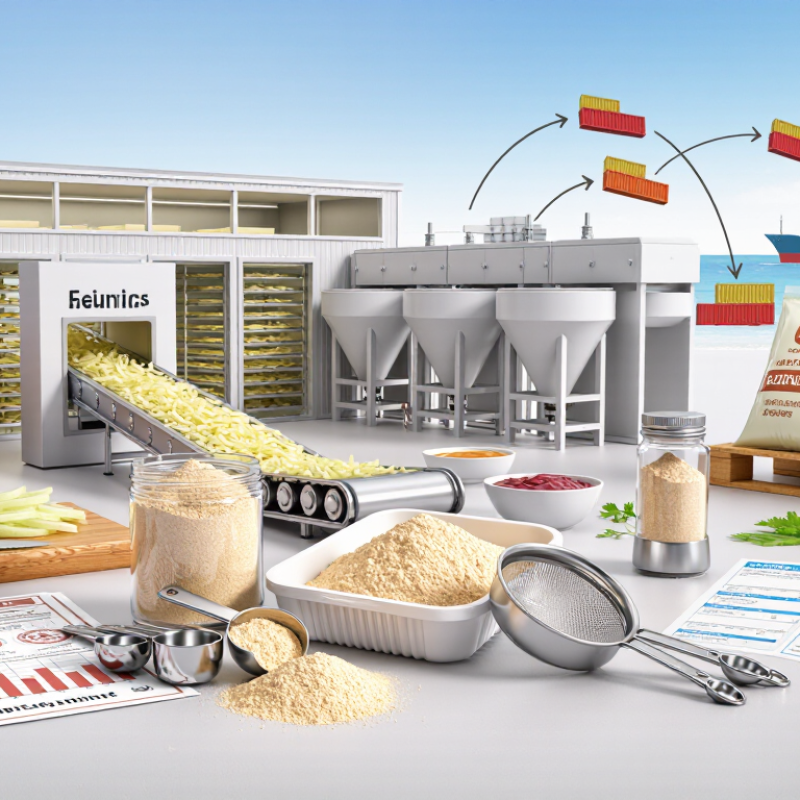
High-quality Dried Onion Powder begins with a written specification, not a supplier promise. Define onion variety, origin, harvest season, mesh size, moisture, color, and flavor strength before requesting samples. A pale cream color may indicate mild processing, but color alone proves little. Ask for representative samples from different production lots. One sample is not enough.
A practical specification commonly includes moisture limits, water activity, particle-size distribution, and microbiological criteria. Set limits for Salmonella, E. coli, yeast, mold, and total plate count according to the destination market. Require testing for pesticide residues, heavy metals, allergens, and undeclared carriers when relevant. The laboratory should use validated methods and identify the test date, lot number, and sampling plan. Inspect aroma after rehydration; stale, sulfur-heavy notes can appear after storage.
Reliable global sourcing includes traceability from farm or processor to sealed bags and shipping documents. Review certificates, but do not treat paperwork as proof by itself. Audit hygiene controls, sieving, foreign-material prevention, pest management, and storage conditions. A retained sample supports comparison when complaints arise. I have learned that strict specifications may still miss changes caused by humidity or transport. That gap deserves review.
How to Source High Quality Onion Powder Globally?
Identifying Global Onion Powder Sourcing Requirements
Global onion powder sourcing starts with a clear product specification. Define the onion variety, origin preference, color, aroma, flavor strength, and particle size. A 60-mesh powder behaves differently from a coarse culinary grade. Moisture limits also matter because excess moisture can cause caking during ocean transport. Small details matter.
Buyers should request recent laboratory reports for microbiological limits, pesticide residues, heavy metals, moisture, and foreign material. Testing should match the destination market’s food requirements. Confirm whether the powder is air-dried, dehydrated, or freeze-dried. A Freeze Dried Onion Powder Manufacturer may offer stronger aroma retention, but the higher cost needs practical justification. Ask for samples from different production lots, not only one attractive sample.
Supplier evaluation should include traceability, factory hygiene, processing controls, packaging, and shipment records. Check whether inner bags protect the powder from moisture and odor transfer. Corrugated cartons may need stronger protection in humid routes. Verify certificates with issuing bodies when possible. Do not rely on a polished document alone. I have found that communication speed can reveal operational discipline, although it is not perfect evidence. Request production lead times, minimum order quantities, shelf-life data, and corrective-action procedures. A supplier who explains a failed batch honestly may be more reliable than one promising flawless results.
Identifying Global Onion Powder Sourcing Requirements
The chart summarizes common commercial purchasing benchmarks used when screening onion powder suppliers globally. Buyers should verify the final limits against destination-country regulations, the agreed product specification, and an accredited laboratory report. Moisture, microbiological safety, particle size, ash, and allergen control are key requirements for consistent quality and supply-chain acceptance.
Sourcing high-quality onion powder starts with auditing the Onion Powder Manufacturer, not comparing prices alone. FAOSTAT data shows global onion production has exceeded 100 million tonnes in recent years. That scale creates wide variation in raw material quality. Ask suppliers for harvest regions, drying temperatures, processing flow, and lot traceability. A reliable facility should identify each batch from incoming bulbs to sealed cartons.
Production controls reveal more than polished brochures. Inspect zoning between raw and finished areas, stainless-steel contact surfaces, air filtration, pest control, and employee hygiene. Codex Alimentarius General Principles of Food Hygiene recommends a preventive, risk-based food safety system. The facility should support this approach through HACCP records, validated cleaning procedures, and documented allergen controls. Request recent certificates of analysis for moisture, microbiological limits, pesticide residues, and foreign materials. Moisture matters. Excess moisture can cause caking, microbial growth, and unstable flavor during storage.
I also compare three consecutive lots, rather than trusting one sample. Their color, aroma, mesh size, and pungency should remain reasonably consistent. A supplier that explains deviations earns more confidence than one promising perfection. That is where evaluation becomes practical. Audit records can be incomplete, and laboratory results still need independent verification. Before signing, arrange a production-site audit or qualified third-party inspection. The best facility combines transparent records, competent technicians, controlled drying, and honest communication when a batch needs review.
How to Source High Quality Onion Powder Globally?
Global sourcing begins with the raw onion, not the finished powder. FAOSTAT reported more than 100 million metric tons of onions and shallots produced worldwide in 2022. Large supply does not guarantee consistent quality. Buyers should verify the cultivar, growing region, harvest date, and storage history. Onions with bruising or prolonged moisture exposure may produce darker powder and weaker aroma. Ask suppliers for pesticide-residue, heavy-metal, and microbiological test reports from accredited laboratories. Review the sampling method, not only the final result. Paperwork can look perfect.
Processing controls determine whether quality survives drying and milling. Confirm washing water standards, drying temperature, sieve size, foreign-material controls, and allergen-management procedures. Codex food hygiene guidance supports documented HACCP-based controls, while ISO 22000:2018 provides a recognized framework for food-safety management. For each lot, compare moisture, color, volatile compounds, bulk density, and total plate count against agreed specifications. Keep a sealed retention sample for independent testing. It is a small discipline.
Traceability must connect the finished bag to the farm or approved collection point. The supplier should explain every major handoff, including transport and warehouse conditions. Temperature and humidity logs are useful, though they are not always complete. That weakness deserves attention. A practical audit should include facility photographs, calibration records, cleaning schedules, complaint history, and corrective-action evidence. Recheck performance after shipment, because a successful first order proves very little.
| Quality Area | Verification Dimension | Recommended Acceptance Criteria | Verification Method | Recommended Frequency | Required Evidence |
|---|---|---|---|---|---|
| Raw Material | Botanical identity | Declared onion species and plant part; no undeclared vegetable or filler material. | Approved specification, supplier questionnaire, visual examination, and identity testing where required. | At supplier approval and periodically thereafter. | Product specification, ingredient declaration, identity-test record, and supplier approval file. |
| Raw Material | Harvest and origin traceability | Every lot traceable to farm, collection area, harvest period, processor, and shipment. | Review lot codes, farm or region records, mass-balance documents, and shipping records. | Every incoming lot. | Traceability map, lot certificate, packing list, and retained sample log. |
| Raw Material | Physical condition of dried onion | Clean, free-flowing, characteristic onion odor, with no visible mold, insects, infestation, or abnormal discoloration. | Sampling plan, visual inspection, odor check, and sieve examination. | Every lot before production. | Incoming inspection report and nonconformance record, if applicable. |
| Raw Material | Pesticide residues | Compliant with the maximum residue limits of the destination market; no unauthorized pesticide detected. | Multi-residue analysis by an accredited laboratory using validated chromatographic methods. | Risk-based; typically periodic and whenever origin, season, or supplier changes. | Current laboratory report, pesticide list, and destination-market compliance review. |
| Raw Material | Mycotoxins and heavy metals | Results must comply with applicable destination-market limits and the purchaser’s risk assessment. | Accredited laboratory testing using validated LC-MS/MS or ICP-MS methods, as applicable. | Risk-based and periodic; increase frequency for higher-risk origins. | Certificate of analysis, sampling record, and regulatory-limit assessment. |
| Processing | Cleaning and foreign-material control | No stones, metal, glass, insects, packaging fragments, or other visible foreign matter in the finished powder. | Documented cleaning process, magnets, sieves, metal detection, and line inspection. | Continuous controls with start-up and end-of-run checks. | HACCP plan, equipment-check records, metal-detector verification, and corrective-action logs. |
| Processing | Drying control | Uniform drying with no burnt, wet, or visibly mold-damaged material; moisture target established in the purchase specification. | Validated moisture method, dryer temperature and time records, and process deviation review. | Each batch and whenever process settings change. | Batch production record, dryer chart, moisture result, and release approval. |
| Finished Product | Moisture content | Typical commercial specification: not more than 8% by mass, unless a different validated specification is agreed. | Validated oven-drying or equivalent moisture method. | Every batch. | Laboratory result, batch-release record, and trend report. |
| Finished Product | Particle size and mesh distribution | Must meet the agreed end-use requirement; a common commercial target is approximately 95% passing a specified sieve, such as 60 mesh. | Sieve analysis using calibrated sieves and a documented sampling procedure. | Every batch or at a defined statistically justified interval. | Particle-size report, sieve-calibration record, and product specification. |
| Finished Product | Color, aroma, and flavor | Characteristic onion color and aroma; free from rancid, musty, smoky, chemical, or burnt notes. | Trained sensory panel, reference sample comparison, and optional color-instrument measurement. | Every batch before release. | Sensory evaluation sheet, reference standard, and deviation investigation. |
| Microbiology | Pathogen control | Salmonella not detected in 25 g, unless the destination regulation or validated customer specification requires a different criterion. | Accredited laboratory testing using a validated reference or equivalent method. | Every batch for high-risk applications or according to a documented risk-based plan. | Microbiology certificate of analysis and environmental-monitoring summary. |
| Microbiology | Indicator organisms and total plate count | Limits must be defined by product use, customer specification, and destination law; typical buyer specifications use total count and yeast/mold limits as release indicators. | Validated enumeration methods performed by a competent laboratory. | Every batch or statistically justified periodic testing. | Microbiological trend analysis, laboratory report, and batch-release decision. |
| Quality System | Food-safety management | Documented prerequisite programs, HACCP-based hazard analysis, sanitation controls, pest control, and allergen management where applicable. | Document review, remote assessment, and risk-based on-site audit. | Before approval and typically every 1–3 years, depending on risk and performance. | Audit report, corrective-action plan, sanitation records, and certification status. |
| Packaging | Packaging integrity and barrier performance | Food-contact packaging intact, sealed, clean, moisture-resistant, and suitable for the expected storage period. | Seal inspection, packaging-material declaration, and transport simulation where appropriate. | Every shipment and during shelf-life validation. | Packaging specification, food-contact declaration, seal-check record, and loading inspection. |
| Storage and Logistics | Warehouse and transport conditions | Store in a cool, dry, clean area away from strong odors, direct sunlight, moisture, chemicals, and pest activity. | Warehouse inspection, humidity monitoring where needed, container inspection, and seal verification. | Before loading, during storage, and upon receipt. | Storage log, container checklist, seal number, temperature or humidity records, and receiving report. |
| Documentation | Certificate of analysis and lot release | Certificate must match the shipped lot and include test date, methods, results, specification limits, and authorized approval. | Document reconciliation against labels, purchase order, lot code, and retained sample. | Every shipment. | Signed certificate of analysis, bill of lading, packing list, and lot-release authorization. |
| Supplier Performance | Ongoing quality scorecard | Track on-time delivery, lot acceptance rate, complaints, laboratory deviations, corrective-action closure, and traceability performance. | Quarterly review of objective quality and delivery data. | Monthly monitoring with quarterly management review. | Supplier scorecard, complaint records, corrective-action reports, and reapproval decision. |
Note: Numerical limits are typical procurement targets where identified. Final acceptance criteria must be confirmed against the intended application, contractual specification, and food-safety regulations in the destination market.
Reliable onion powder sourcing begins with verifiable certifications, not attractive product photos. Ask suppliers for current HACCP, ISO 22000, or recognized food safety certificates. Check the certificate scope, issuing body, factory address, and expiration date. A certificate covering another facility is a warning sign. Request recent laboratory reports for moisture, microbiological safety, heavy metals, pesticides, and allergens. Testing should match the product’s origin and intended market.
Food safety also depends on daily controls. Review raw onion inspection, washing, drying temperature, milling conditions, and metal detection records. Small details matter. A clean production line can still fail through poor storage. Look for sealed bags, pallet protection, humidity control, and traceable batch codes. Sample approval should include appearance, aroma, mesh size, moisture, and taste after rehydration. I once underestimated packaging quality; powder absorbed moisture during transit and formed hard lumps. That mistake was avoidable.
Tips: Compare certificates with shipment documents and labels. Confirm permitted additives, residue limits, labeling rules, and import requirements in every destination country. Do not rely on one laboratory report. Test independent samples before large orders, then repeat checks periodically. Keep written corrective-action records when results fail. Suppliers should explain problems clearly, even when the answer is uncomfortable. Trust grows through evidence, not confident promises. Regulations change. Review them before each new market.
A reliable sourcing program starts with representative samples, not attractive photographs. Request Green Onion Powder samples from multiple production lots. Check color, aroma, particle size, moisture, and rehydration behavior. Test Salmonella, yeast, mold, and pesticide residues through an independent laboratory. FAOSTAT reports global onion and shallot production above 100 million metric tonnes in recent years. That scale creates opportunities, but quality can vary sharply between harvests.
Tips: Keep sealed retain samples. Record lot numbers and test dates. Use moisture-barrier bags inside strong cartons. Oxygen absorbers may help, but validate them with shelf-life testing. UNCTAD reports that over 80% of global trade by volume moves by sea. Therefore, control humidity during long transit. Ask suppliers for container loading photos, temperature records, and seal numbers. Packaging should protect powder from moisture, odor transfer, light, and crushing. I once underestimated carton strength; several inner bags arrived scuffed. Small packaging failures become expensive claims.
Supplier performance needs measurable evidence. Track on-time, in-full delivery, specification compliance, complaint response time, and corrective-action closure. The World Bank’s 2023 Logistics Performance Index evaluates tracking, timeliness, customs, and logistics competence. Use similar indicators in quarterly reviews. Require a current certificate of analysis for every lot, then compare it with independent results. A supplier may pass one audit and still miss a later shipment. That uncomfortable gap deserves attention. Build a backup source before a shortage appears.
The purple potato powder market is gaining attention as food manufacturers seek natural colors, convenient ingredients, and nutrition-focused formulations. Market outlooks presented in major industry research reports point to rising interest in plant-based, clean-label, and shelf-stable products. Purple potato powder fits these trends by offering naturally vibrant color from anthocyanins, along with dietary fiber and antioxidant properties. Its appealing appearance can help manufacturers create distinctive foods without relying on artificial color additives.
Drum-dried purple potato powder is produced by spreading purple potato puree across heated rotating drums, where it forms a thin, rapidly dried film before being scraped into a fine powder. This process supports consistent texture while preserving much of the ingredient’s characteristic flavor, color, and nutritional value. The powder rehydrates easily and can be incorporated into instant soups, bakery products, baby food, beverages, snack coatings, and functional foods.
For product developers, its long shelf life and minimal storage requirements can simplify inventory management and transportation. The powder is also non-GMO and additive-free, supporting clean-label manufacturing and transparent ingredient declarations. As consumers continue to value naturally colored and nutritionally enhanced foods, drum-dried purple potato powder offers a versatile option for developing visually appealing products with practical processing advantages.
Define onion variety, origin, color, aroma, flavor strength, moisture limit, and particle size. Mesh size matters. A fine 60-mesh powder behaves differently from a coarse culinary grade.
Request recent results for moisture, microbiological limits, pesticide residues, heavy metals, and foreign materials. Use an independent laboratory when practical. Testing should match the destination market’s food requirements.
Ask whether the powder is air-dried, dehydrated, or freeze-dried. Freeze-drying may retain a stronger aroma, but costs more. The benefit needs practical testing, not attractive claims.
Inspect raw and finished-product separation, stainless-steel surfaces, air filtration, pest control, and worker hygiene. Review cleaning records, food-safety plans, and allergen controls. A polished brochure proves very little.
Request samples from at least three consecutive production lots. Compare color, aroma, pungency, mesh size, moisture, and rehydration. One beautiful sample is not enough.
Use moisture-barrier inner bags inside strong corrugated cartons. Packaging should resist moisture, odors, light, and crushing. Humidity is the quiet problem.
Ask for loading photographs, container seal numbers, temperature records, and shipment details. Sea transport can expose powder to long periods of humidity. I once underestimated carton strength; scuffed bags followed.
Track delivery timing, complete quantities, specification compliance, complaint response, and corrective-action closure. Request a current certificate of analysis for every lot. Keep retain samples and compare them with independent results.
Yes, especially when harvest quality or shipping schedules may change. A supplier can pass one audit and miss a later shipment. That gap deserves attention.
Sourcing high-quality Onion Powder globally requires a clear understanding of product specifications, application needs, and supply expectations. Buyers should define standards for flavor, color, aroma, moisture, particle size, purity, and microbiological safety before comparing suppliers. A thorough evaluation should include the supplier’s production capacity, processing technology, facility hygiene, raw material origins, and quality control procedures. Traceability from fresh onions to finished powder is essential for maintaining consistent quality and reducing supply risks.
Reliable sourcing also depends on verifying certifications, food safety systems, regulatory compliance, and documentation. Buyers should request representative samples, compare them against agreed specifications, and assess packaging performance during storage and transportation. Lead times, shipping conditions, communication, flexibility, and order consistency should also be reviewed. By combining technical assessments with sample testing, facility verification, and ongoing supplier performance monitoring, companies can build a dependable global supply chain for safe, consistent, and high-quality Onion Powder.