Sourcing minced garlic globally in 2026 isn’t just a price-shopping game. Sure, quotes matter. But buyers also need to dig into origin, harvest timing, processing controls, and how reliably a supplier can actually deliver. China, Spain, Argentina, India, and Egypt are still major garlic-growing regions—no surprise there. The catch is that each one comes with its own mix of varieties, moisture levels, labor conditions, and export strengths.
Ron Engeland, a well-known garlic grower and author, once said, “Garlic quality starts with the seed, the soil, and the grower.” And honestly, that idea doesn’t stop at harvest. A serious buyer should ask for product specs covering particle size, color, moisture, water activity, microbiological limits, allergens, packaging, and shelf life. With Dried Minced Garlic, even tiny moisture differences can shift texture, odor, and how well it stores. A sample might look perfectly clean. The full bulk shipment? Maybe not.
Good sourcing also comes down to supplier audits, batch-level traceability, third-party lab testing, and clear corrective-action procedures. Companies like McCormick & Company, Olam Food Ingredients, and The Garlic Company show how structured food-safety systems can keep international supply chains running. But reputation alone isn’t proof. Ask for current certificates—not old attachments from who-knows-when.
Freight routes? Still unpredictable. So a practical sourcing plan should compare total landed cost, not just the factory quote. That means inspection, insurance, customs handling, testing, warehousing, and possible delays. Some assumptions will be wrong. And the cheapest supplier can end up costing more through inconsistent granulation or weak packaging. The strongest 2026 strategy is probably regional diversification plus measurable quality standards, direct communication, and regular supplier reviews. In minced garlic procurement, solid evidence beats attractive promises every time.
In 2026, global minced garlic sourcing should begin with a precise requirement sheet. Define the garlic variety, particle size, moisture level, color, flavor strength, and packaging format. Specify whether you need fresh, frozen, or Dry Minced Garlic for different applications. Your sheet should also state annual volume, target markets, delivery windows, and acceptable defect rates. Small details matter when one shipment serves several kitchens.
Experienced buyers should test samples before discussing large contracts. Check aroma after rehydration, texture after cooking, and consistency between batches. Ask suppliers for harvest dates, processing records, allergen controls, laboratory reports, and traceability documents. Independent testing can verify microbiological safety, pesticide compliance, moisture, and foreign-material controls. A factory visit may reveal storage issues that paperwork misses. No plan is perfect. Weather, port delays, and crop changes still require honest risk reviews. Build a second-source option, but do not treat it as automatically equivalent.
Tips: Compare samples using the same recipe and water ratio. Record results with photographs and measurable scores. Confirm carton strength for humid routes. Review delivery performance every quarter. Keep specifications flexible enough for reality, but never vague enough to invite quality disputes.
Suitable garlic-producing regions depend on more than harvest volume. China offers broad cultivation and established dehydration capacity. India can provide competitive costs, especially for foodservice grades. Spain and Egypt may suit buyers seeking distinctive aroma and shorter regional supply routes. Argentina is worth reviewing for seasonal diversification. Local climate, irrigation quality, soil conditions, and curing practices affect flavor and color.
Supplier type matters just as much. Grower cooperatives can offer field visibility and stronger farmer relationships. Processing factories usually provide better control over washing, drying, sieving, and metal detection. Trading companies may combine supply from several regions, but traceability can become less clear. Contract processors are useful when particle size, moisture, or packaging must match a fixed specification. Ask for recent harvest details.
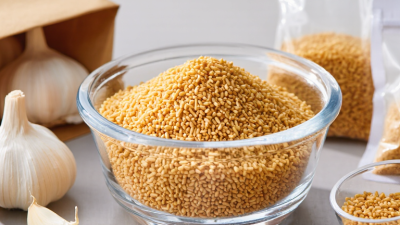
Small details reveal operational maturity. Request samples in sealed bags, then check aroma, browning, moisture, and foreign material. Compare production codes with farm and factory records. Review allergen controls, microbiological testing, sanitation routines, and storage temperatures. Minced Dried Garlic should arrive free-flowing, not clumped or excessively dusty. A pre-shipment inspection can catch uneven drying.
Cheap offers deserve careful questions. I have seen attractive prices hide older crops or inconsistent particle size. I also would not rely on certificates alone. Documents can be current while daily controls remain weak. Visit the facility when possible, or use an independent audit. The best region is not always the cheapest one. It is the region whose farms, processors, and logistics can repeatedly meet your actual specification.
How to Source Minced Garlic Globally in 2026?
Minced garlic quality begins before the factory. Fresh bulbs should show firm cloves, clean skins, and no visible mold. Suppliers should document cultivar, harvest date, origin, and storage conditions. FAOSTAT reports global garlic production above 28 million tonnes in recent years, so origin alone cannot prove quality. Buyers need lot-level evidence. Particle size should remain consistent, with limited crushed tissue and controlled moisture. These details affect flavor, texture, and shelf stability.
Processing control is more important than attractive packaging. Washing water, blades, conveyors, and worker hygiene require documented sanitation checks. Codex General Principles of Food Hygiene recommends hazard-based controls, including validated monitoring and corrective actions. Acidified minced garlic should meet a validated equilibrium pH of 4.6 or below, a critical threshold used to control Clostridium botulinum growth. This is not a substitute for a scheduled thermal process. Laboratory testing should cover Salmonella, Listeria monocytogenes, yeast, mold, and aerobic plate counts. The WHO estimates that contaminated food causes 600 million illnesses annually, showing why small process failures matter.
Global sourcing also needs independent verification. Review HACCP records, calibration logs, water reports, allergen controls, and traceability exercises. Ask for retained samples from each production lot. A sealed jar can still hide uneven acidity or softening at the bottom. I would not accept a certificate without checking its scope and testing date. That sounds cautious. It is. Suppliers may pass audits while daily controls weaken between visits. Remote reviews help, but an experienced on-site audit remains harder to replace.
| Evaluation Area | Key Data Dimension | Indicative Benchmark or Requirement | Risk Level | Recommended Verification | Sourcing Implication | Technical or Regulatory Basis |
|---|---|---|---|---|---|---|
| Raw Material | Bulb and clove condition | Firm, mature cloves with no visible mold, decay, sprouting, insect damage, or abnormal odor. | High | Supplier specifications, incoming inspection, photographic records, and representative sampling. | Reject lots with decay or mold because trimming cannot reliably remove internal contamination or mycotoxin risk. | Good agricultural and hygienic practice principles under Codex food hygiene guidance. |
| Physical Quality | Foreign material | Buyer target: no glass, metal, stones, insects, or hard extraneous matter; define any numerical tolerance contractually. | High | Visual inspection, sieving, magnets, metal detection, and documented corrective-action records. | Require a foreign-material control plan before approving a processing site. | HACCP prerequisite programs and Codex General Principles of Food Hygiene. |
| Particle Quality | Minced particle size | Common commercial range: approximately 1–5 mm; final size should match the intended food application. | Medium | Calibrated sieve analysis or image-based particle-size measurement on composite samples. | Use a tighter range for sauces and dressings; use a coarser cut where visible garlic texture is required. | Customer specification and process capability data; no single universal legal size applies. |
| Composition | Moisture content | Fresh garlic commonly contains approximately 60–70% moisture; processed product specifications vary by format. | Medium | Oven-drying or validated instrumental moisture method, tested by lot. | Moisture affects texture, microbial growth, yield, freezing behavior, and transportation cost. | Product-specific specification; method should be validated for minced garlic. |
| Chemical Safety | pH of acidified minced garlic | For acidified foods, finished equilibrium pH must be controlled at or below 4.6; many commercial formulations target approximately 3.5–4.2 for additional margin. | Critical | Calibrated pH meter, equilibrium-pH testing, acidification records, and process validation. | Do not accept pH claims based only on the acid ingredient or surface measurement. | FDA 21 CFR Part 114 defines the pH 4.6 boundary for acidified foods; destination rules may differ. |
| Microbiological Safety | Salmonella | Absent in a defined analytical test portion, commonly 25 g for ready-to-eat products, subject to destination-market rules. | Critical | Lot-based laboratory testing using a recognized method such as ISO 6579-1 or an equivalent validated method. | Use environmental monitoring and sanitation verification in addition to finished-product testing. | ISO 6579-1 and applicable ready-to-eat food microbiological criteria. |
| Microbiological Safety | Listeria monocytogenes | For ready-to-eat products, commonly absent in 25 g or controlled according to the applicable shelf-life criterion. | Critical | Environmental swabbing, zone-based monitoring, and product testing using ISO 11290-1 or an equivalent method. | Particularly important for refrigerated minced garlic that is consumed without a further kill step. | ISO 11290-1 and destination-market ready-to-eat food requirements. |
| General Hygiene | Aerobic colony count | Set a product-specific buyer limit; a commonly used internal screening target is below 100,000 CFU/g for refrigerated ready-to-eat product. | Medium | Routine enumeration using ISO 4833-1 or an equivalent validated method. | High counts may indicate poor raw-material quality, inadequate sanitation, or excessive storage time. | ISO 4833-1; numerical acceptance limits must be agreed with the buyer and destination market. |
| Chemical Compliance | Pesticide residues | All detected residues must comply with the maximum residue limits of the destination market; where no local limit exists, applicable Codex limits may be considered. | High | Multi-residue laboratory analysis using a laboratory accredited to ISO/IEC 17025. | Confirm the destination country before approving the raw-material source because MRLs can differ between markets. | Codex pesticide MRLs and destination-market legislation, such as applicable regional MRL regulations. |
| Chemical Compliance | Heavy metals and contaminants | Lead, cadmium, and other regulated contaminants must remain within the legal limits of the destination market. | High | Risk-based periodic testing of soil, water, and finished product by an ISO/IEC 17025 laboratory. | Increase testing frequency when sourcing from areas with known industrial, mining, or irrigation-water risks. | Codex General Standard for Contaminants and Toxins in Food and Feed, plus local legislation. |
| Processing Control | Washing and sanitizing | Use potable-quality water and a validated sanitizer concentration, contact time, and monitoring procedure. | High | Water-quality certificates, sanitizer logs, concentration checks, and environmental monitoring. | Sanitizing reduces contamination but does not replace hygienic handling or a validated kill step. | Codex General Principles of Food Hygiene and HACCP-based process control. |
| Processing Control | Thermal treatment or kill step | If a heat treatment is used, the time-temperature combination must be validated for the product, package, and target organisms. | Critical | Thermal-process validation, calibrated data loggers, deviation records, and scheduled verification. | Do not substitute a generic temperature claim for a documented process lethality study. | HACCP validation principles and applicable process-authority requirements. |
| Packaging Safety | Container integrity | Packaging must be food-contact compliant, sealed, leak-free, and compatible with acidity, salt, oil, freezing, and the intended shelf life. | High | Seal-integrity testing, vacuum or pressure checks where applicable, migration documentation, and transport simulation. | Packaging failure can cause recontamination even when the initial microbiological results are acceptable. | Destination-market food-contact-material requirements and HACCP packaging controls. |
| Storage and Logistics | Refrigerated supply chain | Maintain a validated refrigerated range, commonly 0–5°C for chilled product, unless the product specification states otherwise. | High | Continuous temperature data logging, loading checks, carrier qualification, and receiving-temperature verification. | Temperature abuse can shorten shelf life and increase microbial risk without obvious visual changes. | Validated product shelf-life study and destination-market cold-chain requirements. |
| Storage and Logistics | Frozen product control | For frozen minced garlic, maintain approximately −18°C or colder during long-term storage and international transport. | High | Data logger review, frozen-chain inspection, carton condition checks, and thaw-refreeze assessment. | Repeated thawing can damage texture, increase drip loss, and compromise the validated shelf life. | Common international frozen-food handling practice; confirm buyer and destination requirements. |
| Shelf Life | Validated use-by or best-before period | Set only after real-time or accelerated shelf-life testing under the actual storage conditions and packaging format. | High | Microbiological, sensory, pH, color, texture, and package-integrity testing at defined intervals. | Do not copy shelf-life periods from another format, package, or processing site. | HACCP validation, stability testing, and destination-market labeling rules. |
| Traceability | Lot and recall capability | Each shipment should link the finished lot to raw-material lots, processing records, packaging materials, laboratory results, and dispatch documents. | High | Mock recall exercise, one-step-back/one-step-forward records, and document reconciliation. | Require rapid traceability before approving a supplier for global distribution. | Codex traceability principles and applicable food-business operator requirements. |
Note: The numerical values shown are practical procurement benchmarks or widely used safety boundaries, not a universal legal specification. Final limits should be confirmed against the product format, processing method, packaging type, intended use, and regulations of the destination market.
For 2026 procurement, minced garlic sourcing should compare landed cost, not only FOB price. FAOSTAT’s latest complete series reports global garlic production above 28 million tonnes in 2022. Supply is large, but processing capacity and harvest timing remain uneven. ITC Trade Map and UN Comtrade data show strong export concentration in Asia. However, HS codes rarely separate minced, diced, frozen, and dehydrated garlic. That limits direct price comparisons.
Indicative 2025 trade quotations placed frozen minced garlic near US$1.20–2.20 per kilogram FOB. Aseptic or specially processed garlic often reached US$1.80–3.20. These are working benchmarks, not universal averages. Freight can change the ranking quickly. Drewry’s container-freight reports showed substantial route volatility during 2025. A cheaper supplier may become expensive after reefer charges, port delays, and inspection fees. That gap matters. Request prices under identical terms, such as FOB, CIF, or DDP, with the same pack size and specification.
A practical contract should define garlic variety, mesh size, moisture, microbiological limits, pesticide testing, and metal detection. Require a retained sample from each production lot. Payment terms of 20% deposit and 80% after inspection can reduce exposure, although smaller suppliers may resist. Include a 60-day price-adjustment clause linked to raw-garlic costs and freight indexes. Seasonal contracts may secure volume, but fixed prices can become unfavorable after a poor harvest. I would also challenge minimum-order quantities; a 10-ton commitment may look efficient but can create avoidable cold-storage costs. Forecasting remains imperfect. Supplier audits, traceable lot codes, and independent pre-shipment testing provide stronger evidence than attractive quotations.
Sourcing minced garlic globally in 2026 requires more than comparing supplier prices. FAOSTAT reported global garlic production at roughly 28 million tonnes in recent years, creating broad sourcing options. Yet import controls differ sharply by destination. Fresh minced garlic usually needs a phytosanitary certificate, commercial invoice, packing list, certificate of origin, and accurate HS classification. Dried products require different treatment. Minced Dry Garlic is shelf-stable, but it still needs moisture, microbiological, and residue controls.
For fresh garlic, keep the product between 0°C and 4°C during transport. Use sealed, food-grade containers and continuous temperature records. A broken sensor can create a serious dispute. Importers should also verify food-facility registration, traceability, allergen statements, and supplier approval rules. In the United States, FDA import guidance and Foreign Supplier Verification Program records are central. In the European Union, border controls and plant-health requirements may apply through official certification systems. UN Comtrade data can help compare trade flows under fresh and dried garlic classifications, but codes must be checked carefully.
Tips: Request recent laboratory results before signing a contract. Confirm the exact HS code with a customs specialist. Audit the processor, not only the trader. For chilled minced garlic, test the route with a small shipment first. In practice, paperwork is often less reliable than expected. One missing lot number can delay clearance, even when the product itself is safe. Temperature mapping should cover loading, storage, and delivery, not just the truck.
Reliable sourcing begins with supplier verification, not a low quotation. Request the company’s registration documents, facility address, export history, and recent audit reports. A video call can reveal storage conditions, but an in-person audit remains stronger. Check whether garlic is processed in a clean, dry area with controlled pest management.
Ask for samples from several production lots. Test moisture, particle size, color, odor, microbiological limits, pesticide residues, and foreign matter through an independent laboratory. Specify whether you need Minced Garlic Dried, dehydrated, or another format. The difference affects texture, shelf life, and rehydration performance. Review the certificate of analysis against your own testing results. One matching sample proves little.
A reliable global supply strategy needs more than one approved supplier. Use suppliers from different growing regions when practical, and define backup volumes before an interruption occurs. Keep written specifications covering packaging, labeling, palletization, loading photos, and acceptable defect levels. Confirm traceability from farm or processor to shipment lot. Check customs documents and destination-country requirements before signing contracts. Small trial orders can expose weak packing, inconsistent cuts, or delayed communication.
Do not rely on promises alone. I would still reassess suppliers after successful deliveries, because quality can drift quietly. Forecasts may also be wrong. Maintain safety stock based on lead time, seasonality, port risk, and actual consumption data.
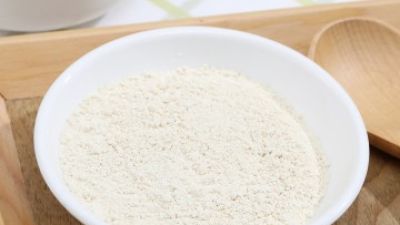
Garlic powder is a practical pantry ingredient made by drying and finely milling garlic. It provides concentrated flavor for seasonings, sauces, soups, marinades, meat products, snacks, instant foods, and ready meals. According to FAOSTAT, garlic remains one of the world’s major vegetable crops, supporting a broad and stable raw-material base. USDA FoodData Central also lists garlic powder as a source of minerals such as calcium, iron, and manganese, although it is normally used in small quantities and should complement—not replace—a balanced diet.
When buying garlic powder, check that the ingredient list contains only dried garlic, with no added salt, fillers, or artificial additives. Consistent color, fine texture, strong aroma, low moisture, and reliable microbiological controls are important for food manufacturing. A traceable supply chain, from sustainable farm to factory, can help maintain flavor and batch consistency. For B2B buyers, suppliers with long-term export experience, customized specifications, and professional R&D support are better positioned to meet different formulation and packaging requirements. Garlic flakes and granules can also provide alternative textures.
In everyday cooking, mix garlic powder into dry rubs, soup bases, dipping sauces, and marinades, or blend it with oil before coating vegetables, poultry, seafood, or potatoes. Add it during cooking for an even flavor distribution, and store the product in a cool, dry, airtight container to protect its aroma and prevent caking.
China offers broad cultivation and established dehydration capacity. India may suit cost-sensitive foodservice grades. Spain and Egypt can provide distinctive aroma or shorter regional routes. Argentina may support seasonal diversification. The cheapest region is not always the most reliable.
Climate, irrigation, soil, and curing practices influence aroma, color, and moisture. Poor curing may create darker pieces or uneven texture. Ask for recent harvest information, not only annual production claims.
Grower cooperatives can provide stronger field visibility. Processing factories usually control washing, drying, sieving, and metal detection more directly. Trading companies may combine regions, but traceability can become less clear. Contract processors suit fixed particle sizes or packaging requirements.
Request sealed samples from several production lots. Check aroma, browning, moisture, dust, clumping, particle size, and foreign material. The pieces should flow freely. One attractive sample proves little.
Request registration documents, facility details, export history, and recent audit reports. A video call can show storage areas and cleanliness. An in-person audit is stronger. Look for dry rooms, pest controls, sanitation routines, and organized lot records.
Test moisture, particle size, color, odor, microbiological limits, pesticide residues, and foreign matter. Use an independent laboratory when practical. Compare laboratory results with the supplier’s certificate of analysis. Documents may look current while daily controls remain weak.
Approve suppliers from different growing regions when practical. Define backup volumes before disruptions occur. Maintain safety stock according to lead time, seasonality, port risk, and actual consumption. Forecasts can be wrong. Review them regularly.
Specify product format, moisture, particle size, packaging, labels, palletization, defect limits, and loading photos. Confirm traceability from farm or processor to shipment lot. Check customs documents and destination requirements before signing. Small trial orders can reveal weak packing or delayed communication.
Sourcing Minced Garlic globally in 2026 requires a structured approach that balances quality, cost, continuity, and compliance. Buyers should first define product specifications, including garlic variety, cut size, moisture level, packaging format, shelf life, and expected annual volume. Suitable producing regions and supplier types can then be assessed according to harvest conditions, processing capabilities, export experience, and capacity. Quality evaluations should cover raw material freshness, processing hygiene, flavor consistency, microbiological safety, traceability, and storage conditions.
International supplier comparisons should consider pricing, minimum order quantities, payment terms, production schedules, and contract flexibility rather than focusing only on the lowest offer. Import planning must include accurate commercial documents, product specifications, labeling requirements, customs procedures, and temperature-controlled logistics where necessary. Before signing an agreement, buyers should verify certifications, audit facilities, review samples, check references, and test trial shipments. A reliable global strategy should also include multiple qualified suppliers, contingency inventory, regular performance reviews, and clear procedures for handling quality issues or delivery disruptions.