When you're choosing wholesale OEM pet ingredients for your business, quality really matters — like, it’s everything. I mean, a recent report from the American Pet Products Association showed that in 2021, the U.S. pet industry hit a massive $123 billion in retail sales. That really drives home how crucial it is to source top-notch ingredients. Industry veteran Dr. Samuel Greene puts it simply: “Picking the right pet ingredients can make or break your product’s success and ultimately win your customers’ trust.”
Getting a good handle on what goes into pet products is pretty important. Take ingredients like Star Anise Ingredient, for example — they’re catching some buzz because of their unique benefits. But here’s the thing: not all suppliers offer certified products, which makes it extra important to do your homework and really vet your partners. Certifications like ISO and CE are pretty much must-haves when it comes to guaranteeing quality. Oh, and by the way, the upcoming AI features at the 2026 Canton Fair are supposed to make this vetting process even smoother.
In such a competitive pet market, you can’t afford to cut corners on ingredients. From experience, skipping on quality can lead to products that just don’t perform or even fail altogether. Working with reliable suppliers can really set your products apart and influence how customers perceive them. So, taking a close look at your ingredient choices isn’t just a good idea — it’s key to long-term success.

Understanding wholesale OEM pet ingredients is crucial for any business in the pet food industry. These ingredients serve as the building blocks of quality products. They ensure consistency, nutrition, and safety in pet foods. By choosing the right ingredients, businesses create trust with customers. Pet owners care deeply about what they feed their pets.
Sourcing wholesale ingredients can seem daunting. Not every supplier upholds the same standards. Some ingredients may not meet strict quality requirements. It’s important to do thorough research. Look for suppliers with a good track record. Ask for samples to evaluate quality. Transparency in sourcing is key. Understand where each ingredient comes from and how it's processed.
Pricing can also vary significantly between suppliers. Don't be swayed by lower costs alone. Cheaper does not always mean better quality. Consider the long-term impact on your brand. Would you sacrifice reputation for a short-term gain? Be mindful of these factors. They can make or break your business.
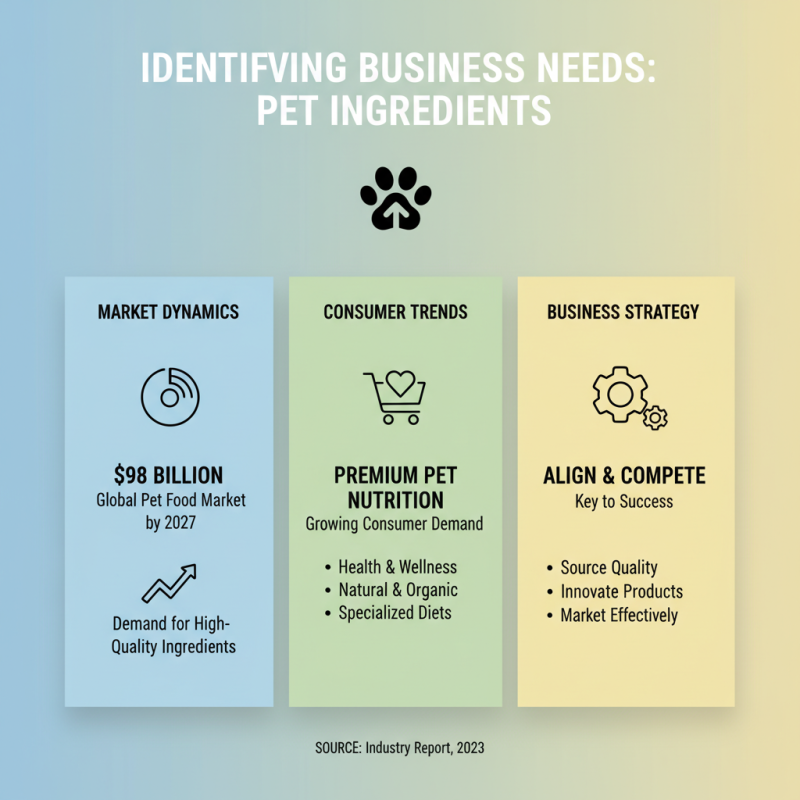
When identifying your business needs for pet ingredients, understanding the market's dynamics is crucial. According to a recent industry report, the global pet food market is projected to reach $98 billion by 2027, driven by the increasing demand for high-quality ingredients. This reflects a growing consumer trend towards premium pet nutrition. Your business must align with this trend to stay competitive.
Considerations of your target audience form the foundation of your ingredient selection. Are you catering to health-conscious pet owners? If so, you might want to prioritize natural and organic ingredients in your offerings. A survey reported that over 70% of pet owners are willing to pay more for such products. However, the challenge lies in sourcing these premium ingredients sustainably and affordably. Balancing quality with cost is a constant struggle for many businesses in this sector.
Additionally, regulatory compliance is a significant factor. Navigating the complex web of food safety regulations can be daunting. Ingredients must meet both quality and safety standards. Failure to comply can lead to significant setbacks for your business. Regular consultation with industry experts and reviewing compliance guidelines can help mitigate these risks. Ensure that your ingredient choices reflect both your brand values and the expectations of your consumer base.
Choosing the right wholesale OEM pet ingredients is crucial for your business's success. The global pet food industry is projected to reach $98 billion by 2024, increasing the need for quality ingredients. When selecting suppliers, focus on a few key factors.
Check the supplier’s certifications. Ensure they meet regulatory standards for safety and quality. Many reports suggest that 60% of buyers prioritize certified ingredients over non-certified ones. Non-compliance can lead to significant risks for your product.
Consider the source of ingredients. Transparency is vital. A trustworthy supplier should provide detailed information about ingredient origins. This not only boosts product credibility but also aligns with consumer trends favoring transparency.
Tip: Look for suppliers with a track record of sustainable practices. Many pet owners now prefer eco-friendly products. Conducting thorough evaluations can seem overwhelming. However, don’t rush. A hasty decision may lead to issues down the road.
Focus on the supplier’s customer support. A reliable partner should be responsive and helpful. Poor communication can hinder your operations and affect product quality. Evaluate potential suppliers with care. You’re building a foundation for your brand.
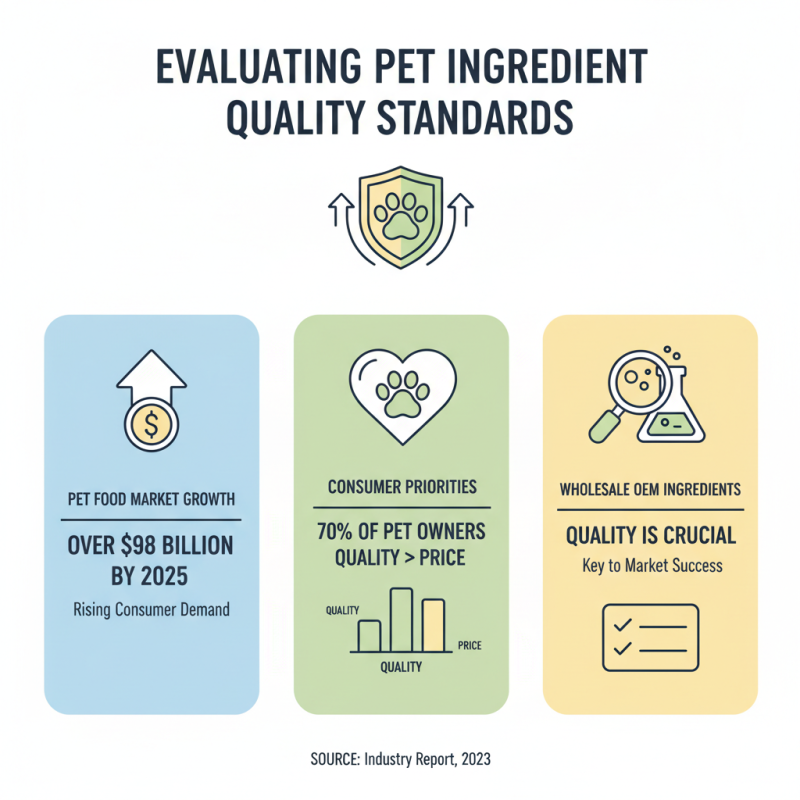
When choosing wholesale OEM pet ingredients, evaluating quality standards is crucial. The pet food market is expected to reach over $98 billion by 2025. This growth reflects rising consumer demand for high-quality ingredients. According to a recent industry report, 70% of pet owners prioritize ingredient quality over price.
Understanding ingredient sourcing is essential. Look for suppliers who provide transparency about their ingredient origins. Many use third-party testing to ensure safety. As pet owners become more knowledgeable, they increasingly seek information about sourcing practices. A survey showed that 65% of pet owners prefer brands that share ingredient sourcing details.
Beware of vague claims and certifications. Some terms, like "natural" or "premium," lack regulation. This can mislead consumers. It’s vital to assess actual nutritional value. Consulting resources like the Association of American Feed Control Officials (AAFCO) can guide ingredient assessments. Remember, not all ingredients labeled as “high quality” truly deliver nutritional benefits. Regularly reviewing supplier practices and ingredient claims is key to maintaining quality.
When choosing wholesale OEM pet ingredients, cost-effectiveness is key. Understand your budget. Analyze the prices of various suppliers. Compare their offerings thoroughly. Sometimes, the cheapest option may not ensure quality. Balancing price and quality is crucial.
Additionally, consider your target market. Higher-quality ingredients might attract discerning customers. It may also justify a higher price point. However, pricing strategies must be flexible. Be open to adjustments based on market trends. Track what competitors are charging in your niche.
Think about shipping and logistics costs too. They can significantly impact your overall expenditure. If a supplier is far away, will you incur extra costs? Evaluate this when making purchasing decisions. Reflection on your choices can lead to better outcomes next time. It’s a learning process.
| Ingredient Type | Average Cost per kg | Supplier Reliability | Lead Time (days) | Quality Rating (1-5) | Availability |
|---|---|---|---|---|---|
| Chicken Meal | $2.50 | High | 14 | 4 | In Stock |
| Salmon Oil | $6.00 | Medium | 7 | 5 | Limited |
| Brown Rice | $1.20 | High | 10 | 4 | In Stock |
| Pea Protein | $3.00 | Medium | 5 | 4 | In Stock |
| Sweet Potato | $1.80 | High | 12 | 5 | In Stock |
Building strong relationships with suppliers is crucial in the wholesale OEM pet ingredients business. Trust is the foundation. Start by communicating openly. Discuss your needs clearly. Misunderstandings can lead to problems. Make sure both sides understand expectations.
Regular check-ins can build rapport. This approach helps to maintain a personal connection. Sometimes, suppliers can face challenges. Acknowledging their situation can foster cooperation. Transparency is key. If a delivery is delayed, reach out. Better yet, follow up before issues arise.
Consider visiting suppliers when possible. Face-to-face interactions can strengthen bonds. It shows commitment. Building relationships can take time, but it is worth the effort. Sometimes, it feels uncomfortable. However, reach out anyway. Keep the lines of communication open. It can lead to better deals and quality products in the long run.
Navigating the landscape of regulatory compliance for pet ingredients is essential for any business. Understanding local and international regulations is crucial. Different regions may have varying guidelines on ingredient sourcing, labeling, and safety standards. Failing to comply can lead to severe consequences. Staying informed about these regulations is not always straightforward.
It’s also important to conduct thorough research on your suppliers. Ensure they adhere to the necessary guidelines. Some suppliers may promise high-quality products, but their practices may not meet all requirements. Regular audits of suppliers can help identify potential compliance issues. Finding reliable information on compliance can be a challenge, as regulations frequently change.
Documentation plays a key role in compliance. Accurate records of ingredient sourcing and testing are vital. Many businesses overlook the importance of maintaining these records. In some cases, lacking proper paperwork can lead to compliance failures. Taking the time to create a strong compliance framework can mitigate risks. It may require adjustments along the way, but ongoing evaluation is necessary.
: These ingredients are essential for creating quality pet food products. They ensure nutrition, safety, and consistency.
Sourcing affects the quality of ingredients. Not all suppliers maintain the same standards. Research is necessary.
Check for transparency from suppliers about ingredient origins. Look for third-party testing for safety assurance.
Lower costs do not always equate to better quality. Consider your brand's reputation before making decisions.
Understand local and international guidelines on sourcing and labeling. Conduct regular audits of your suppliers.
Be wary of vague claims. Terms like "natural" can mislead. Assess the actual nutritional value of ingredients.
Regular reviews are important to maintain quality. Practices and claims can change, affecting your ingredient standards.
Accurate records of sourcing and testing help ensure compliance. Missing paperwork can lead to serious issues.
Pet owners prefer brands that share sourcing details. Transparency builds trust and improves customer relationships.
Finding reliable suppliers can be difficult. Not all suppliers meet necessary quality and safety standards consistently.
When choosing wholesale OEM pet ingredients for your business, it's essential to first understand their significance in meeting your market demands. Identifying your specific business needs will help you narrow down the options available, ensuring that the ingredients align with your product offerings. Key factors to consider include supplier reliability, ingredient quality, and overall cost-effectiveness, which will significantly impact your profit margins.
Evaluating the quality standards of pet ingredients involves thorough inspections and certifications to ensure safety and efficacy. Building strong relationships with suppliers can facilitate better pricing and collaboration, ultimately enhancing your supply chain. Additionally, navigating the regulatory compliance landscape is crucial to ensure that the pet ingredients meet industry standards and legal requirements. By taking these steps, businesses can successfully choose the right wholesale OEM pet ingredients to thrive in the competitive pet market.