Sun-dried tomatoes have really become a pantry staple for so many of us. They’re loved for their bold flavor and the fact that they’re so versatile. I mean, Chef Mario Batali, you know, the guy who's pretty much an expert when it comes to Mediterranean cooking, once said that dried sun-dried tomatoes bring out a depth of flavor that fresh tomatoes just can’t match. They’re processed in a way that not only amps up sweetness and umami but also strips away excess moisture, making them super punchy in dishes.
Using sun-dried tomatoes in your cooking really opens up a lot of fun possibilities. Whether it’s jazzing up a sauce or adding a little extra kick to your salad, these little gems pack a punch. Plus, they’re not just flavorful—they’re also pretty healthy, offering vitamins C and K. Because they’re so concentrated, you don’t need much to get a big flavor hit, which means you can make a simple dish taste amazing with fewer ingredients.
But here’s the thing—gotta be careful! Overdoing it with dried sun-dried tomatoes can really overpower the other flavors in your dish. They’re bold, and that’s part of their charm, but it takes a bit of practice to find that perfect balance. So, have fun experimenting, but keep in mind that a little goes a long way. It’s all about exploring, learning, and moderating along the way. After all, cooking with sun-dried tomatoes is as much about the experience as it is about the final bite.
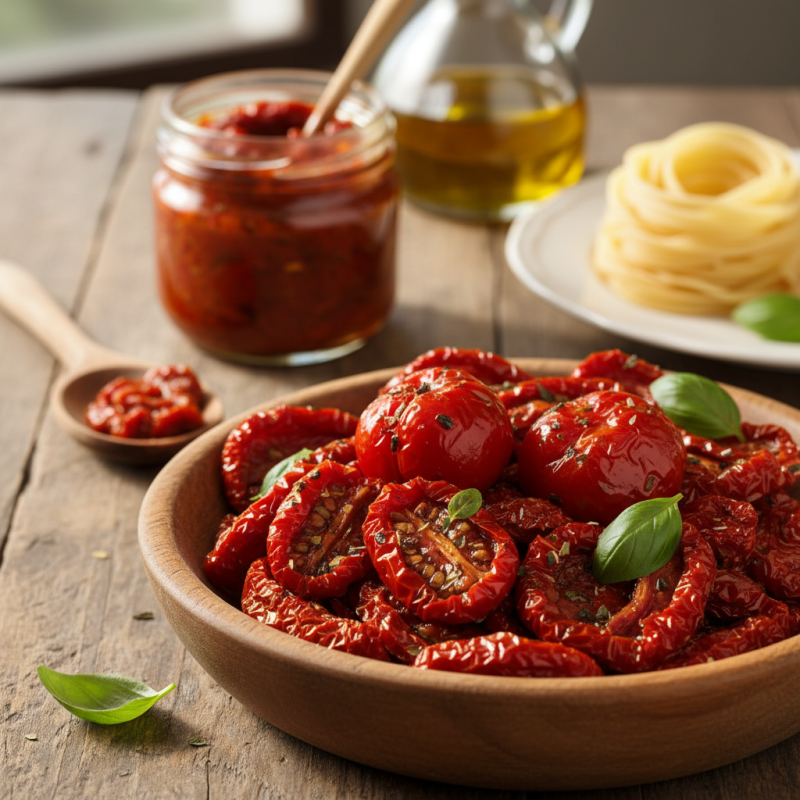
Sun dried tomatoes are a culinary treasure. They have a rich flavor and pack a nutritional punch. These tomatoes undergo a drying process, which concentrates their vitamins and minerals. This makes them an excellent source of antioxidants. They are particularly high in vitamin C, which supports your immune system. Their intense umami flavor can elevate a mundane dish to something remarkable.
In addition to antioxidants, sun dried tomatoes are a great source of iron. Iron is essential for transporting oxygen in your blood. Consuming iron-rich foods helps prevent fatigue and supports overall energy levels. These tomatoes also provide dietary fiber, which aids digestion. Fiber is crucial for maintaining gut health and promotes a feeling of fullness.
It is interesting to note that sun dried tomatoes can be high in sodium, depending on their preparation. This calls for moderation, especially for those monitoring their salt intake. Cooking with these flavorful ingredients may lead to experimentation with various recipes, but remember, balance is key. Enjoying sun dried tomatoes means appreciating their unique taste while being mindful of the overall dish.
Sun dried tomatoes bring a unique flavor boost to many dishes. Their concentrated sweetness and tangy profile create a depth that fresh tomatoes often lack. When you sprinkle them over salads or blend them into sauces, the difference is noticeable. The intense aroma captivates the senses, enhancing any meal’s overall taste experience.
The Best Sun Dried Tomatoes add a burst of umami. They work wonders in pasta dishes, giving a rustic touch. These tomatoes can also pair beautifully with cheeses, olives, and fresh herbs. However, not all sun dried tomatoes are created equal. Finding the best sun dried tomatoes can be a process of trial and error. Some may be too dry or overly salty, which can alter a dish's intended flavor harmony.
Cooking with sun dried tomatoes does come with challenges. Balancing their strong taste with other ingredients is essential. A little goes a long way, yet the temptation to overdo it can be strong. Reflecting on the right amounts often leads to better flavor integration. Experimenting with them opens doors to culinary creativity, leading to unexpected but satisfying combinations.
Sun dried tomatoes are not just a flavorful ingredient; they pack a nutritional punch. One significant advantage is their high lycopene content. Lycopene is a powerful antioxidant. It helps protect cells from damage. Consuming foods rich in lycopene may reduce the risk of certain cancers. Sun dried tomatoes are an excellent choice for a health-conscious diet.
In addition to their antioxidant properties, sun dried tomatoes can enhance many dishes. They add a sweet and tangy flavor profile. When you include them in salads or pasta, the taste bursts with richness. However, it is essential to balance their concentrated flavor. Some might find it overwhelming. Moderation is key to enjoying their benefits without overpowering the dish.
Furthermore, with the availability of Bulk Sun Dried Tomatoes, adding them to your pantry has never been easier. They can be stored for long periods, making them a convenient ingredient. At the same time, ensure they are stored correctly to maintain flavor and quality. Small changes in your cooking can lead to great health improvements when you use these tomatoes wisely.
Sun dried tomatoes are a flavorful addition to any dish. They offer a delicious taste while being low in calories. A typical serving size of sun dried tomatoes has about 30 calories. In contrast, fresh tomatoes contain around 22 calories per medium-sized fruit. This slight difference highlights their nutrient density. They provide a rich source of vitamins and antioxidants, such as vitamin C and lycopene. Lycopene is known for its potential heart health benefits.
Incorporating sun dried tomatoes into meals can enhance flavor without adding excessive calories. Studies show they contain more concentrated nutrients and flavor compounds compared to fresh tomatoes. This concentration results from the drying process, which removes water and intensifies the taste. People can enjoy sun dried tomatoes in salads, pastas, and as toppings. They add a savory, umami-rich profile that can transform simple dishes. However, moderation is key. Their salt content can be higher than fresh tomatoes, which requires careful consideration. Balancing flavors is essential for making nutritious choices.
| Benefit | Description | Nutritional Value (per 100g) |
|---|---|---|
| Low Calorie | Sun dried tomatoes are low in calories, making them a perfect ingredient for weight loss diets. | ∼ 258 kcal |
| High in Antioxidants | Rich in antioxidants like lycopene, which supports heart health and reduces cancer risk. | Lycopene: 0.5-0.7 mg |
| Rich in Vitamins | High levels of vitamin C and vitamin K support immune function and blood clotting. | Vitamin C: 50 mg, Vitamin K: 7.9 µg |
| Flavor Enhancement | Adds a rich, umami flavor that elevates various dishes. | - |
| Versatile Ingredient | Can be used in salads, pastas, pizzas, and more. | - |
| Source of Fiber | Promotes digestive health due to its fiber content. | Fiber: 7.3 g |
| Mineral Content | Contains important minerals such as potassium and iron. | Potassium: 1,600 mg, Iron: 3.8 mg |
| Convenient and Long-lasting | Easy to store and has a long shelf life compared to fresh tomatoes. | - |
| Low Fat | Contains minimal fat, making it suitable for low-fat diets. | Total Fat: 1.5 g |
| Low Glycemic Index | Helps in maintaining stable blood sugar levels. | - |
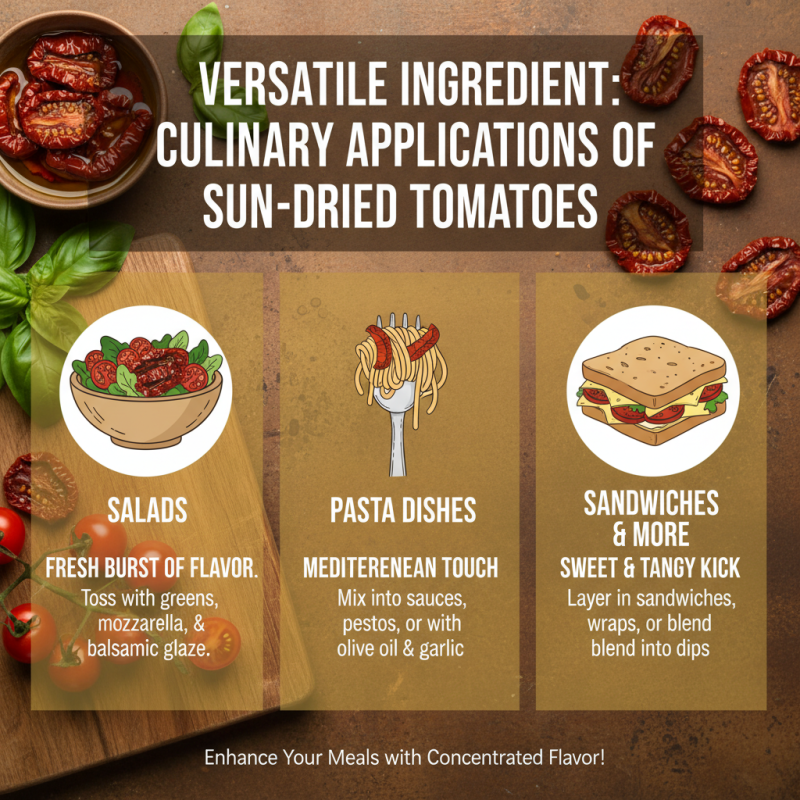
Sun dried tomatoes are a versatile ingredient, enhancing flavors across various cuisines. Their concentrated sweetness and tangy kick make them ideal for salads, pasta dishes, and sandwiches. You can toss them into a fresh salad for a burst of flavor. Adding sun dried tomatoes to pasta brings a Mediterranean touch that elevates simple meals.
In baking, sun dried tomatoes offer depth. They balance the richness of cheeses in savory breads or pies. When you blend them into spreads, they create an inviting appetizer for gatherings. Variety is key; they can also be rehydrated for soups or added to marinades for meats, infusing robust tastes.
While they offer many uses, not every recipe benefits from them. Sometimes, their intense flavor can overpower delicate dishes. Experimentation is essential; find the right balance. For those eager to explore, it's easy to Buy Sun Dried Tomatoes and unleash creativity in the kitchen. დ
The drying process of tomatoes involves removing moisture to enhance flavor and extend shelf life. Sun drying is one traditional method. It’s simple yet requires patience. Tomatoes are sliced and placed in the sun, often for several days. The heat and light draw out moisture, concentrating their sweetness and acidity.
Understanding this process helps appreciate the depth of flavor sun-dried tomatoes offer. Each batch can vary based on sunlight and humidity. Not all tomatoes dry the same way; some may end up overly tough or too chewy. Watching for signs of readiness is crucial.
The drying technique also plays a role in nutrition. Dehydrated tomatoes retain much of their vitamins, making them a healthy addition to meals. That being said, some nutrients may degrade during the drying. Knowing how to overcome these challenges can lead to better results. Experimenting with different drying times can refine your skills. Each attempt can teach you something valuable.
Sun dried tomatoes offer unique economic benefits for home cooks and professional chefs alike. They are shelf-stable, requiring less frequent purchases compared to fresh produce. Retail data from the Specialty Food Association reveals that sun dried tomatoes contribute to minimizing food waste, which represents a significant cost-saving. By investing in sun dried tomatoes, you make a long-term commitment to both your budget and flavor profile without sacrificing quality.
When using Chopped Sun Dried Tomatoes, consider their ability to enhance various dishes. A little goes a long way, adding a burst of flavor to salads, pasta, and sauces. You can save money by using smaller quantities of sun dried tomatoes to achieve rich tastes compared to other fresh ingredients. Studies show that incorporating superfoods like sun dried tomatoes can lead to healthier dietary habits, making them not just an economic choice but a health-conscious one as well.
Tip: Rehydrate chopped sun dried tomatoes in warm water or olive oil for an added depth of flavor in your meals. It’s a simple step that elevates your cooking without breaking the bank. Also, consider storing them in a cool, dark place to extend their shelf life. This practice ensures you always have a cost-effective ingredient ready at hand.
: Sun dried tomatoes are rich in lycopene, a powerful antioxidant that helps protect cells and may lower cancer risk.
They add a sweet and tangy flavor. However, their concentrated taste can be overwhelming. Moderation is important.
Store them correctly to maintain flavor and quality. This preserves their taste and nutritional value for longer periods.
The process involves removing moisture. Sun drying takes time and precision, affecting the tomatoes' final texture and flavor.
No, not all tomatoes dry uniformly. Some may become too tough while others are merely chewy. Watch for readiness signs.
Some nutrients may degrade during the drying process. However, dehydrated tomatoes still retain many beneficial vitamins.
Experimenting with different drying times can lead to better results. Each drying attempt can provide useful insights.
The strong flavor can dominate a dish. Balance is crucial to ensure it complements other ingredients without overpowering them.
They are nutrient-dense and versatile, fitting well into various meals, from salads to pasta.
Yes, sun drying requires patience. Rushing can affect the final flavor and quality of the tomatoes.
Sun Dried Tomatoes offer a myriad of nutritional and culinary benefits that can enhance any dish. Rich in antioxidants, particularly lycopene, these tomatoes not only boost flavor profiles but also support overall health. Their low calorie count combined with high taste makes them an ideal ingredient for those looking to maintain a balanced diet while enjoying robust flavors. Additionally, the versatility of Sun Dried Tomatoes in various culinary applications—from salads to sauces—demonstrates their ability to complement a wide range of cuisines.
Understanding the preservation techniques involved in drying tomatoes reveals their longevity and cost-effectiveness as a superfood. By incorporating Tomatoes Sun Dried into your cooking, you can enjoy a delicious and nutritious ingredient that elevates your meals while providing significant health advantages.